People in North Frontenac have raised concerns about big changes before. Palmerston. Battery storage. Wind projects. Different proposals, same pattern. A few residents start asking questions, then more people pay attention, then the whole township feels the tension. Raising concerns is half the battle. The other half is showing up.
Showing up is how a community turns a private opinion into a public reality. It is how council sees the difference between background noise and a community that is paying attention with its eyes open. It is also how residents protect their own credibility. A person who shows up to listen is harder to ignore, because they are there for the full picture, not the rumour version.
This matters even more now, because council already did the hard part. Township of North Frontenac listened. Council made community-first decisions that were not safe and not convenient. Those decisions came with consequences, and those consequences are now in motion through appeals and formal process, including the Ontario Land Tribunal. That is where things get expensive. That is where people second-guess. That is where outside pressure leans in. That is where councils start wondering if the room that demanded accountability is going to disappear the moment the fight gets real. This is the moment when presence carries moral weight.
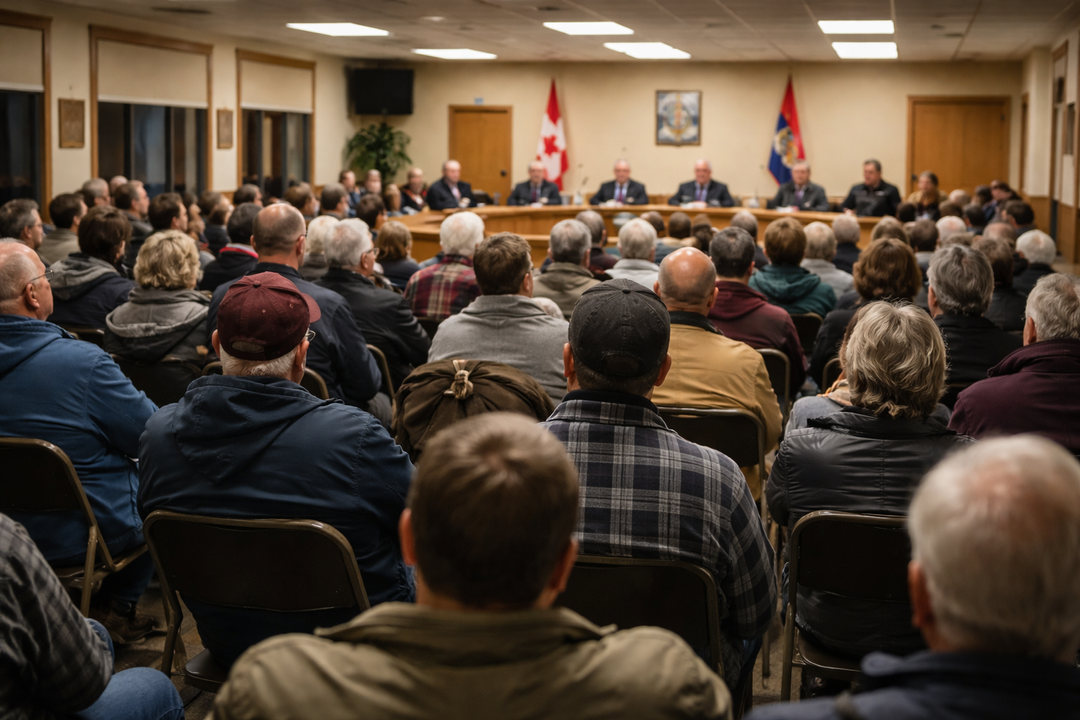
A full room in the public February 6 meeting does not need speeches, drama or anger. It just needs neighbours to fill seats and listen. People who make it clear, through simple presence, that council was not alone when it chose a community-rooted stance, and council is not alone now that it is being challenged for it.
Showing up matters. The councillor who shows up to the meeting in a snowstorm. The resident who shows up just to fill a seat and listen. That is where local democracy lives. It is not glamorous. It is usually boring. Boring is good in politics. Boring means procedure is being followed. Boring means decisions are being made on the record. Boring means power is behaving.
Another important issue at hand residents should be participating in is the Alto high-speed rail consultation. The window is open from January 15 to March 29, 2026. That is a defined period where public input is being collected and recorded. It is not a promise that every concern gets its preferred outcome. It is still a moment where the public record is being built.
Showing up can mean being in a council chamber. It can also mean being present in writing. Emails to MPs and ward councillors are worth the trouble. Those messages get seen. They get logged. They get counted. Even when a person never receives a personal reply, the volume and the substance of what residents say shapes what decision-makers know they will be held to later. The strongest signal a rural community can send, when it wants its decisions defended, is the oldest one: people showing up.