
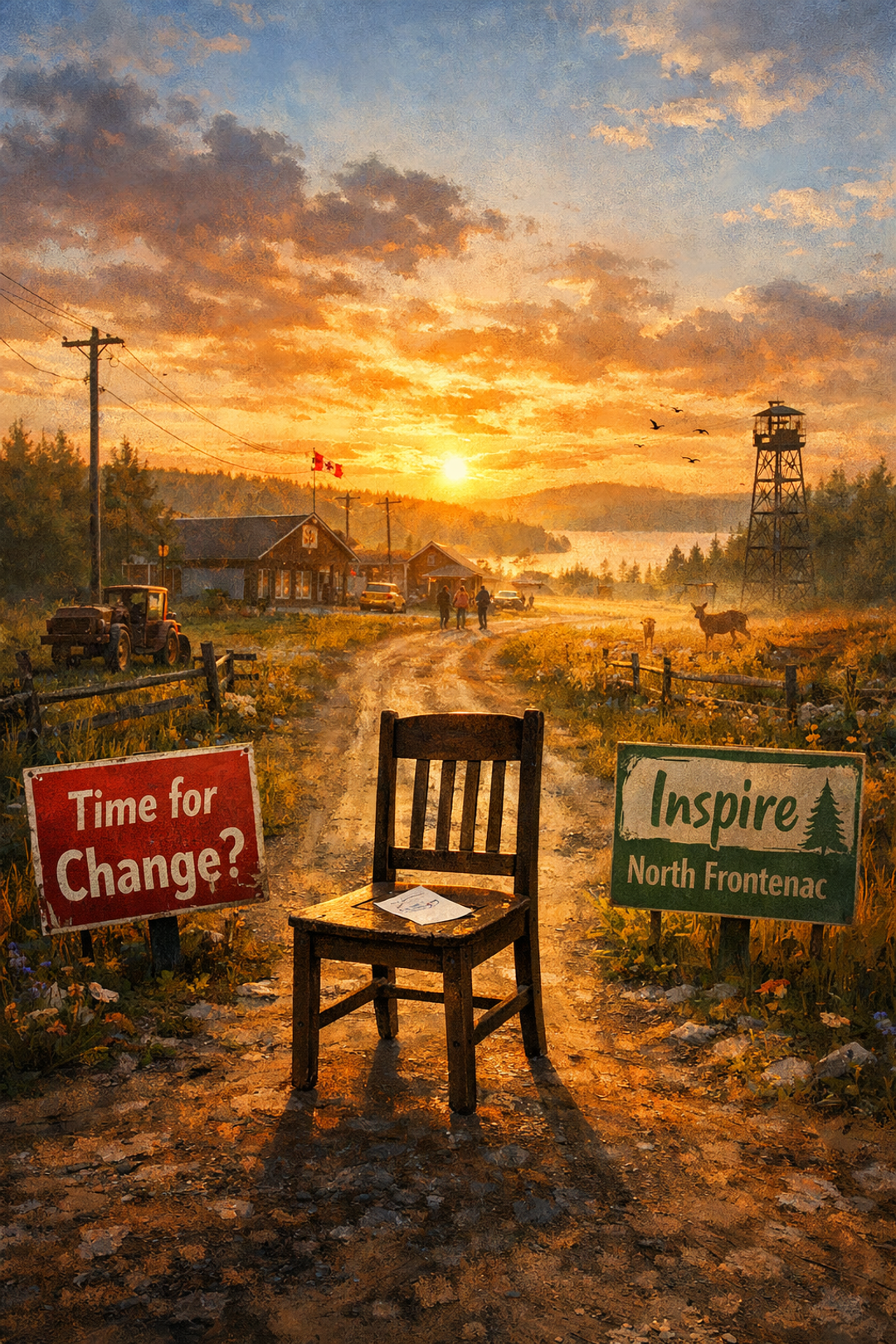
North Frontenac is in a stretch of stagnation. People feel it in different ways, but it shows up in the same places. Trust is thinner. Patience is shorter. Progress feels slow. The next council term is a reset point for the whole region, but a reset does not arrive on its own. It arrives when regular people change what they will tolerate, what they will ask, and what they will accept as an answer. Running for office is one way to do that. It pulls the curtain back fast.
Most first-time candidates start with a clean belief. Work hard, stay informed, speak clearly, and the best ideas will rise. Local politics does not run on clean theory. It runs on people. People carry old grudges. People fear change. People repeat half-stories until they harden into certainty. A campaign teaches you where the real problem sits. It sits between how people think local government works and how it actually works. That gap can frustrate someone, but It can also wake up the township.
A serious run for office changes the conversation even before a single vote is counted. When someone shows up prepared and stays steady, the room shifts. People start reading staff reports instead of guessing. People start asking what a motion actually does, what it costs, and what it locks in. Neighbours who avoided each other start comparing notes. Private complaints turn into public accountability, with names, dates, and choices on the record. To me that just proves one thing, “winning” is not the point.
Winning matters to for the record, however, It does not matter as much to the culture and community. A campaign built around winning tends to tighten into ego and rivalry North Frontenac has seen it time and time again. Some say North Frontenac has a habit of voting people out rather than in. A campaign built around raising standards leaves something behind, even if the vote count is brutal and you lose by a landslide. The township absorbs it. It shows up later in coffee conversations, in volunteer rooms, in delegations, and in the next person who decides to speak up calmly instead of staying quiet. You are part of the township record.
Most people have not even fathomed that a citizen often has more power to affect change than a Councillor does. Council has formal authority, but Councillors are representatives. They are supposed to be the voice of their constituents. Their job is to carry the public’s priorities into the chamber and to make decisions that reflect the people they serve. When that relationship flips, when residents start acting like council leads and the public follows, the system drifts into lazy process and people start treating politics like a spectator sport instead of a community responsibility.
The last while has shown what happens when the bottom of the barrel gets scraped. People have already tasted it. As recent as 2025. That experience becomes useful if it produces learning. Cycles can mature. Communities can correct. Corrections start when the future matters more than yesterday’s arguments and when more people choose to stay decent inside the mess.
If someone runs with that mindset, they leave a mark whether they win or lose. The township remembers who raised the standard and who lowered it. Stagnation breaks when enough people decide the reset is real, and then act like it.
Sources
None. Commentary based on lived experience and observation of local civic dynamics.