A Pride Statement from a High-Functioning Autistic Journalist
I’m done being rounded off. I won’t perform “normal.” Autistic people are not rough edges to sand away. Support respects identity and builds conditions where we can work at full power. I’m high-functioning autistic, and I’m proud of it. Direct speech is my standard. I say what I mean and expect the same in return. Two autistic people in a room can communicate with striking clarity because no one has to pretend.
My senses are tuned. I hear the lights, feel the grit in the wind, catch the detail that doesn’t fit. Society got worse when it dulled its senses. Numbing creates blindness to signals that call for change. Moral consistency is a daily practice, and it lives in small choices long before a headline prints: state the conflict of interest before anyone asks, keep a record of what was promised and what was delivered, publish corrections the moment new facts land, decline anonymous smears even when they target people you dislike, hold allies and opponents to the same standard, accept the cost that comes with a line that holds.
For autistic people, consistency functions as infrastructure. Clear rules reduce noise, predictable routines protect energy, and boundaries prevent overload. Integrity becomes a working method—one set of expectations, written down, followed every time. In journalism, that method looks like this: questions in the open, sources on the record when possible, timelines documented, evidence archived, money separated from editorial decisions, praise and criticism grounded in verifiable facts. Trust accrues slowly under those conditions and survives pressure when it comes.
Pressure often arrives dressed as help: advice, programs, “best practices.” The message to be less literal or less intense erases people. Real accommodation shapes environments so autistic minds operate as themselves. Neurodiversity is reality. Brains differ. Communication styles differ. Strengths and limits land in different places. A decent society builds rooms where many kinds of minds contribute without penalty and where support scales to need without stigma.
To autistic readers: claim your strengths—precision, pattern sense, deep focus, truth-telling—and ask for what makes work possible: clear agendas, quiet space, written timelines, straight answers. These are tools, not favors. To families and neighbours: support needs vary widely, and dignity applies at every level. High-support autism calls for resources that work—communication tools, sensory-safe spaces, predictable routines, —and for patience that does not vanish when plans change or days go sideways.
About labels: “Asperger’s” is no longer a separate diagnosis. The field uses Autism Spectrum Disorder because the range of traits and support needs sits on one spectrum. If you grew up with the Asperger’s label, your history stands. The umbrella changed to reflect lived reality, not to erase anyone’s identity.
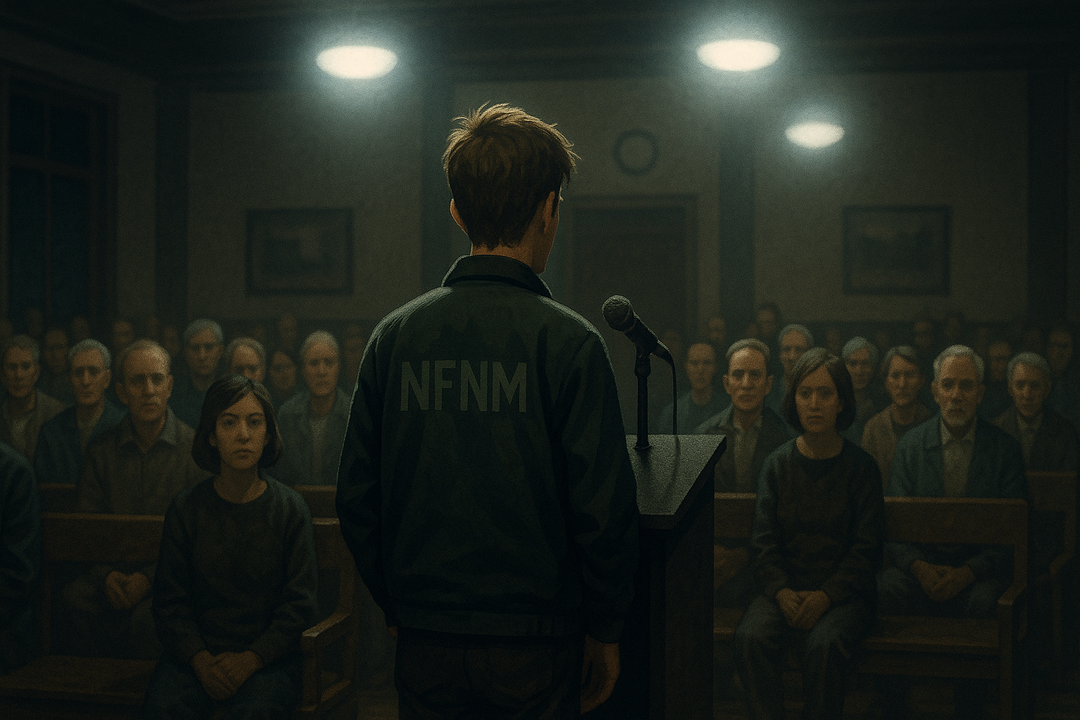
I live and work on these terms. The newsroom I’m building, NFNM, runs on direct speech and public evidence. Cleaner truth improves public life. I am autistic. Meet me as I am. I won’t shrink to fit someone else’s comfort or dull the traits that make my work effective. Integrity is the offer.
We’re not broken. We’re done apologizing.