
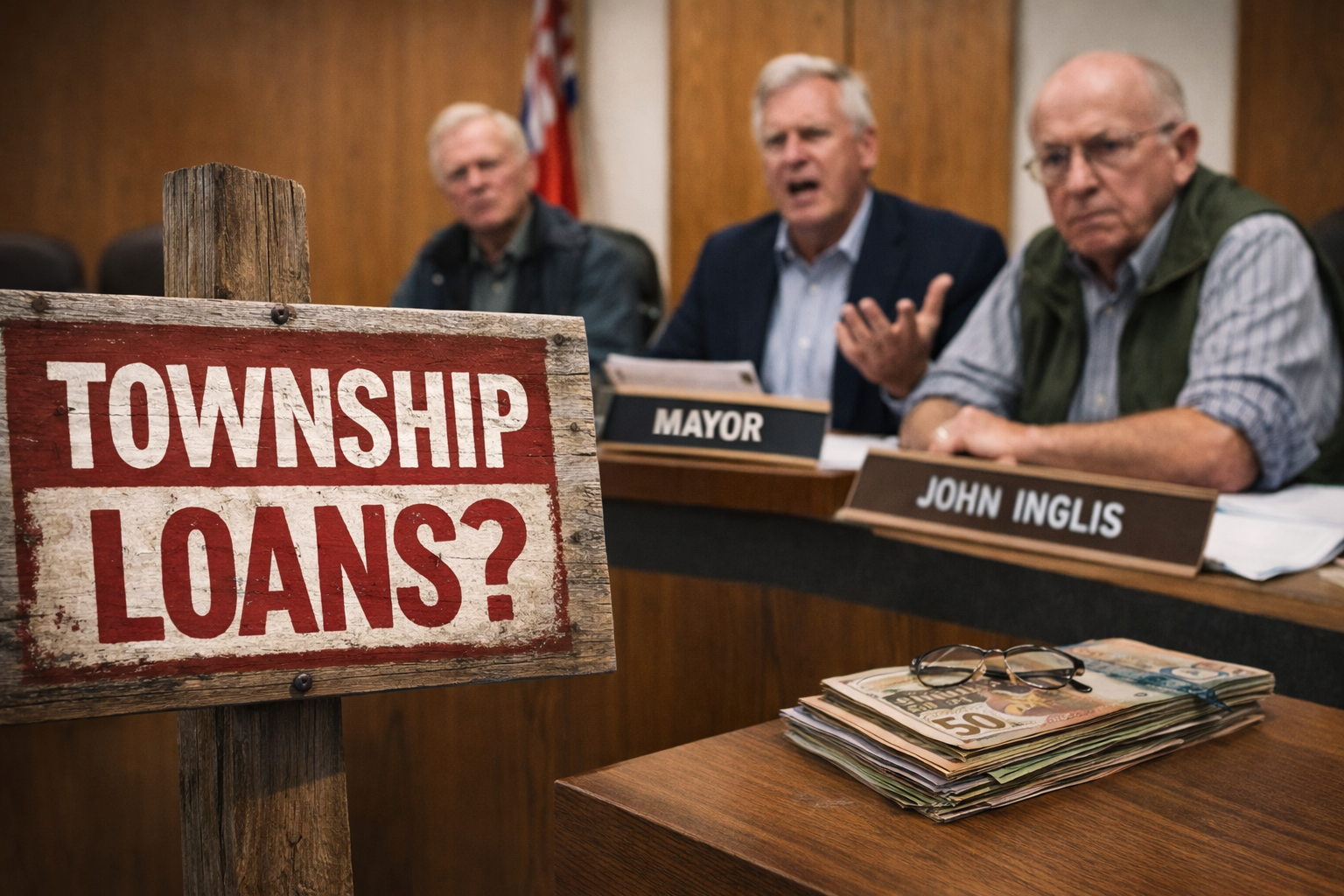
There was a moment in today’s Housing Advisory Task Force meeting where the conversation left housing policy and wandered into something far more dangerous.
Councillor John Inglis floated an idea that the township could use its reserves to give residents direct loans so they could buy homes. Not a program run by the County. Not a targeted, legislated tool tied to property taxes. A straight municipal loan concept, backed by taxpayer reserves.
The Mayor’s response was immediate and sharp: “I can’t believe you would even suggest that.”
Councillor Wayne Good also shut it down, refusing the idea on the grounds that it would carry enormous risk on the taxpayer’s dime.
That exchange matters, because it revealed something basic: parts of this file are drifting into fantasy.
Reserves are not a magic bucket of extra money. They are where a rural township protects itself from reality: roads, culverts, bridges, emergency repairs, and big capital hits that do not politely arrive on budget day. When someone suggests using those reserves as a loan pool, they are proposing that the township turn into a bank.
And banks do not just hand out money. They assess credit, verify income, secure collateral, manage defaults, chase arrears, litigate, foreclose, and absorb losses. That’s a whole institution. North Frontenac does not have a mortgage department. Full stop.
Even worse, the people who most need “affordable housing” are often the least likely to even qualify for a loan. If the target is truly low-income residents, seniors, and single people, then “just give them a loan” is not a solution. It’s a talking-point that ignores the basic math of fixed incomes and limited borrowing power. It’s performative, and it’s not taking the matter seriously. At all.
This is where the idea crosses a line from naïve to reckless.
Municipal loan schemes also open the door to the kind of questions that destroy public trust: who gets approved, who gets refused, what relationships exist, what pressures get applied behind closed doors, what happens when a councillor’s supporter applies, and what happens when defaults start to pile up.
Today, the Mayor and Wayne Good’s pushback was a rare moment of common sense cutting through the fog. It also exposed how far off-track this discussion can get when people start treating reserves like a convenient pile of spare cash.
North Frontenac has land. It has a clear rural advantage that cities don’t have. That’s where realistic housing innovation lives: serviced lot rentals, simple infrastructure readiness, and letting residents own their own units so taxpayers aren’t left holding the liability. Turning the township into a lender is the opposite of rural practicality. It’s a municipal disaster waiting to be signed.
Note: As of publication time, no official minutes or audio have been posted. This recap reflects NFNM notes taken in the room during the public discussion.