What this is, in plain languageNorth Frontenac has a practical housing option sitting right in front of it, and most residents have never heard it explained. The idea is a Township-run pilot program in or near Plevna that creates a small number of legal, buildable lots specifically designed for modest housing. Not a subdivision, not a trailer park, and not a campground. A small cluster of serviced lots intended for compact homes that people can actually afford.
The Township would do the front-end work that usually blocks rural housing. It would select a suitable site near the village, create the lots through normal planning tools, and set clear rules for what can be placed there. The goal is to turn land into lawful addresses that support small-footprint living, while keeping the program tight, manageable, and scalable.
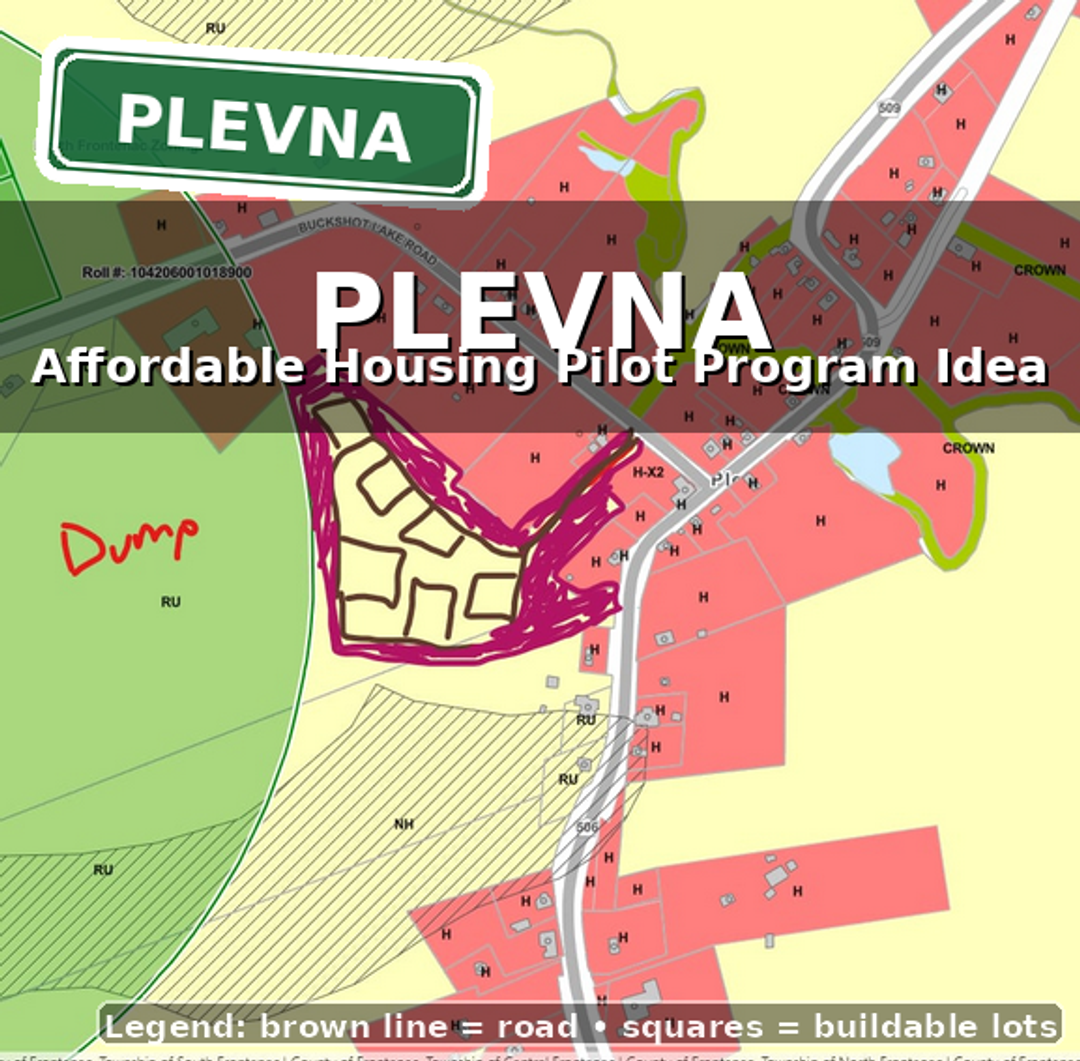
The image below is a very raw and basic concept of where the build locations might be. That is not a proposal. That is a sketch. The purpose is to show that village-scale housing is spatial and practical possible within North Frontenac.
The program would target a specific outcome: making sure that housing remains available to people who work, care for others, attend school, or simply want to build a life in North Frontenac, without requiring wealth they do not have.
Small towns usually offer housing in three forms: Owner-occupied homes (the standard); Long-term rental housing (rare and expensive in rural Ontario); and social housing (nearly absent outside larger centres).The Plevna Tiny House Lot Program would add a fourth option: A limited set of lots where people could build their own homes, finance modest structures, and avoid the debt trap that often comes with conventional housing. This creates a different type of security.
It also creates community stability. When young people can stay near their families without moving away. When workers can live near their work. When older residents can downsize and still belong to the place they know. Then the community has structure.
People always ask how the township could afford this. The answer is it might not be expensive at all.
There are model programs that have already tested this approach. The Tiny House Lot Program that launched in St. Paul, Alberta, created 54 lot placements using 11 acres, with lot prices under $55,000 CAD. That is not meant to be a blueprint. It is meant to show that this type of housing solution can be engineered modestly, with real outcomes.
For North Frontenac, the first step would be to examine what the township’s goal is (affordability, retention, skill diversity, land use), find land that fits the parameters, and work with zoning and planning rules to create the legal structure that makes small-lot homes possible.
The end result might be 10 to 20 serviced lots, creating room for 10 to 20 households to have the security of a housing address that fits their means.
The second part of the question is zoning. North Frontenac’s Zoning By-law was modernized last year. Within that modernization, it includes provisions for tiny homes. The existing rules allow a tiny home on a permanent foundation and a tiny home on wheels (THOW). The lot sizes required are smaller than conventional lots, which is the beginning of what a Plevna lot program would need. The zoning rules are already there. The next step is finding a suitable site, and testing the model to see if it works as expected.
This is the type of housing approach that a township can do on its own terms. It does not require waiting for provincial housing announcements or federal money, although both would welcome support if it came. It is practical, it is scalable, and it addresses a real gap in how North Frontenac is currently set up to house its own people.
That is the idea. What comes next is the conversation about whether North Frontenac wants to give it a try.