On November 30, just after 8 in the morning, the day in Snow Road Station began quiet and ordinary.
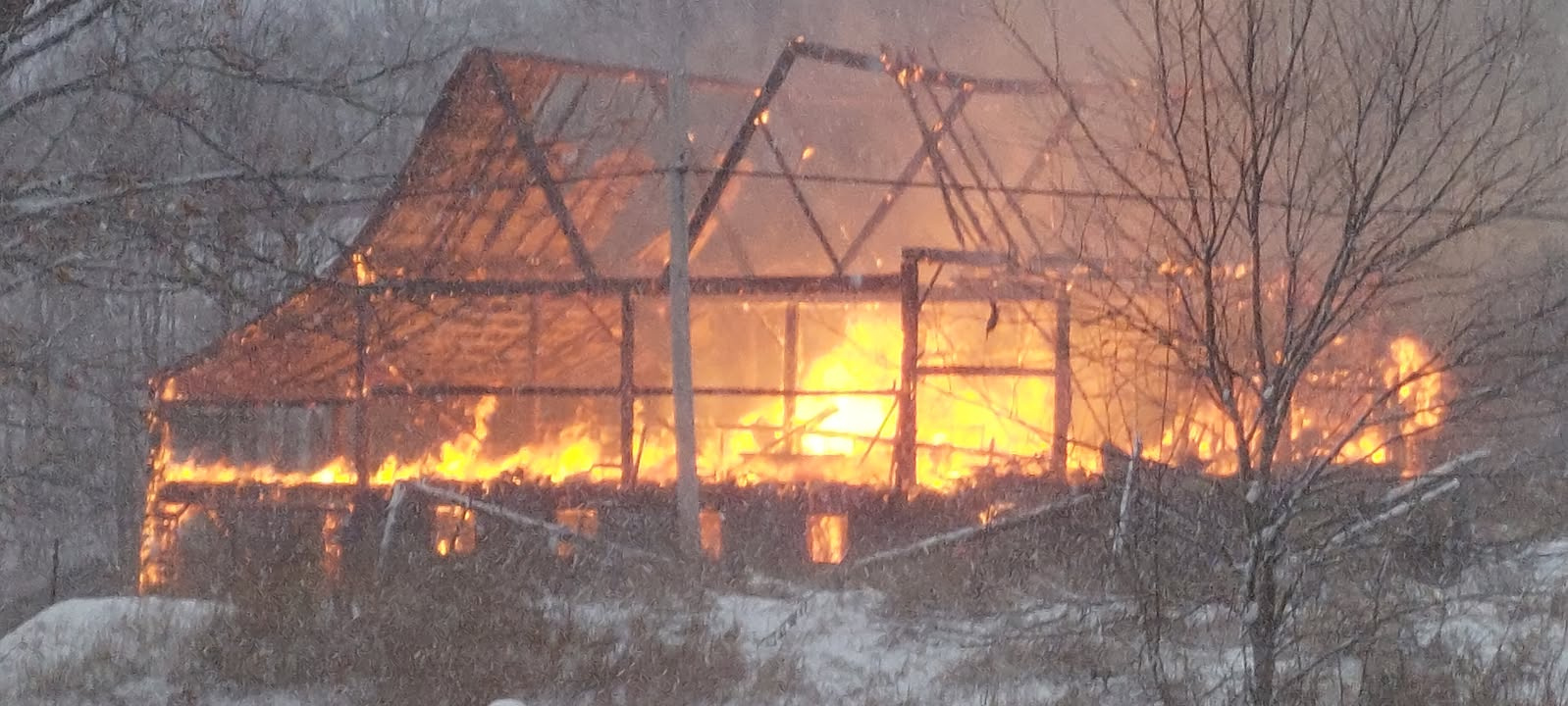
From the house, the barn looked peaceful. A light lifting off the roof made it seem as if snow was swirling in the air, the kind of small winter moment that usually passes without a second thought. Then the colour shifted. White turned to grey. The movement thickened. It was not snow. It was smoke.
Molly and her neighbour rushed outside for a better look. Flames were already breaking through the roof. The words came out hard and flat: the barn is on fire.
The call went in. Within about twelve minutes, volunteer fire crews from Lanark and North Frontenac were on scene. They set up on the road with a transfer tank and water truck, laying out hose, checking lines, moving with the steadiness that comes from hard practice and long experience. Watching them arrive felt like watching a second line of neighbours show up, this time in bunker gear.
The barn they were fighting for had been cared for. It was dry and tidy, clear of gas cans and explosive products. That care removed some dangers, yet the same dry, seasoned wood that kept the building strong for so many years now fed the fire. Flames shot twenty to thirty feet above the roof. The upper floor held furniture and antiques, staged there only weeks earlier when the house went up for sale. In what felt like moments, that whole level was gone. Soon the rest followed.
Standing there, it was hard to take in how fast it happened. Heat rolled across the yard. Smoke wrapped itself around the trees. A place that had been solid and familiar for generations crumpled into a jagged line of black against the sky.
This barn carried more than tools and lumber. Built by the Gemmill family, it stood as a landmark on that corner for a very long time. People used it to give directions. They worked in it. One Gemmill family member met her husband there. You could look at it and see layers of life that had nothing to do with money: hay bales and pigeons, quiet moments in the loft, long days of work, and small conversations that changed people’s paths.
When you lose a building like that, you lose a shape in the landscape and a shape in your own memory at the same time.
In recent years, fires like this have become a painful thread across Eastern Ontario. Barn fires have destroyed livestock shelters and equipment storage on family properties. Wildfires and dry seasons have led to fire bans from Ottawa to Kingston. Smoke has drifted in from other regions and provinces, turning the sky strange and reminding everyone how quickly fire can reach across distance. You feel all of that in the background when you watch a barn burn in a small community. It is no longer a headline somewhere else. It is right in front of you.
Neighbours began to arrive as the crews worked. Some came quickly, still in house clothes and boots pulled on without socks. Others arrived more slowly, taking in the scene even before they stepped out of their vehicles. People stood together at the edge of the tape, quiet, tearful, or offering simple words. There is a certain kind of silence that only happens at a fresh loss like this. You could feel it there.
The financial damage is heavy. The antiques and furnishings in the upper level were part of a plan for the next chapter of Molly’s life. The foundation under that barn had been repaired and brought back into shape only a couple of years ago. The building was square, leak free and ready for more years of use. All of that work is now something you only see in photographs and in the way people talk about what used to be.
Through all of this, the volunteers held their line. Firefighters from Lanark and North Frontenac worked side by side, trading positions at the nozzles, checking each other’s gear, and managing water on a narrow rural road in winter conditions. This was the second time in a short stretch that they had teamed up in the wider area. They are ordinary people who leave their jobs and families at a moment’s notice to stand between someone’s home and open flame. Watching them work brought a kind of quiet gratitude that sat right beside the grief.
Every fire scene has its own centre. Here, that centre was Molly.
She is more than a name in a report. She is a friend and a neighbour. She has history in this community. People know her as tough, determined and fiercely competitive. The barn that burned was part of that story, yet it never defined her. As the flames rose and the walls fell, you could see the weight of it on her face and in the way others looked at her. They were not just watching a building go. They were watching a person they care about go through something that would break many of us.
What stays with me most is that mixture of strength and heartbreak. A lifetime of memories in that barn, a future being prepared around it, and a person who has already walked through other hard chapters now facing this one as well.
To Molly, and to everyone who loved that barn: my deepest condolences. You are a friend, a neighbour and a community member we all look up to. I trust you will find your way, as you always have. You are a trooper, a leader and a fierce competitor, the true meaning of survivor.