A continued, respectful, community debate
We all want North Frontenac to feel more like home tomorrow than it does today. One idea worth studying—raised in recent conversations—is to relocate and modernize the waste sites near Palmerston Lake. If a future Council chose that route after proper studies and approvals, the land they leave behind wouldn’t be ready for homes or schools right away; it would function as a brownfield that needs time and care to recover. In that window, a quiet, screened BESS could be one of the few compatible interim uses—and the community dollars it generates could help fund restoration and landscaping so the corridor blends back into the landscape.
Late last night, Mayor Gerry Lichty told me he is the one who asked to delay the BESS vote that had been set for Friday, October 24, 2025 by one week so councillors could reflect on the public’s comments and materials. The vote is now scheduled for Friday, October 31, 2025, and he says it will be a recorded vote. He also made it plain he will not use strong-mayor powers: elected democratically, lead democratically.
Public Committee (as an option for Council)
If this passes, Council could consider asking a resident committee to recommend how any BESS community dollars are allocated each year—debated in the open, with Council voting in public. That would mean choices you can see and touch every budget cycle: measured tax relief if that’s the will; a roads program that fixes the stretches everyone complains about; a small commercial pad so local business has a place to grow; and, yes, doing the homework on modernizing/relocating the waste sites if the studies and approvals add up. The point isn’t to promise everything. The point is to do the work, publish the numbers, and decide in daylight.
Let’s be honest about jobs. The BESS itself won’t employ many people day-to-day. The employment comes in the waves that spread out: better winter road maintenance (and fewer neighbour disputes), steady support for seniors’ facilities and programs, safe, smooth roads and activities for kids, real space for small business, and annual projects that hire local crews to build and maintain. Being caretakers of this place doesn’t mean refusing to grow; it means growing responsibly with oversight so we can take on more serious responsibilities well.
Noise and look aren’t being waved away; they’re being written into the deal. The site can be quiet—setback, equipment selection, orientation, tonal limits, continuous monitoring. It can be camouflaged—vegetated berms, dark-sky lighting, colours and textures that disappear into the tree line. If you can’t hear it at the property line and you can’t see it from the road, you’ve solved the two complaints that power half the fear online. Those aren’t marketing lines; they’re enforceable conditions Council is pressing into the agreement.
Safety is not a paragraph on Facebook. It’s third-party fire-safety engineering, pre-incident planning with our volunteers, drills, and properly funded gear. It’s a decommissioning fund posted up front, a performance bond that keeps a private proponent honest, and a right-to-audit so we can check the numbers instead of trusting a press release. If the operator slips, the Township needs step-in rights to protect the public interest. That’s what grown-up guardrails look like, and they belong in the paperwork.
Now, a word about whose voices we centre. The people living directly across from the waste site carry the daily impact. They are absolutely right to be worried, and everything possible should be done to mitigate any effect on them—sound, sightlines, traffic, safety — down to measurable standards and continuous monitoring. Their concerns come first. For the rest of us, not so much. The environmental questions have been asked and answered on the record. If some choose not to believe the answers, that’s cynicism, not evidence; no amount of information will change those minds. That’s reality.
If we’re going to organize around something, consider asking Council to study moving the dumps off the lake. It makes little sense to petition against a screened, quiet, bonded BESS beside an existing waste site while leaving the waste site untouched on the edge of one of our most beautiful lakes. And be clear about land use: a long-serving waste site is, for practical purposes, a brownfield. You’re not putting homes there. Realistically, a BESS —quiet, screened, and bonded — may be one of the few compatible uses while the soil gets time and stewardship. In the meantime, the project’s community dollars can pay for smart restoration: native plantings on berms, pollinator habitat, stormwater improvements, and visual screening that returns the corridor to green.
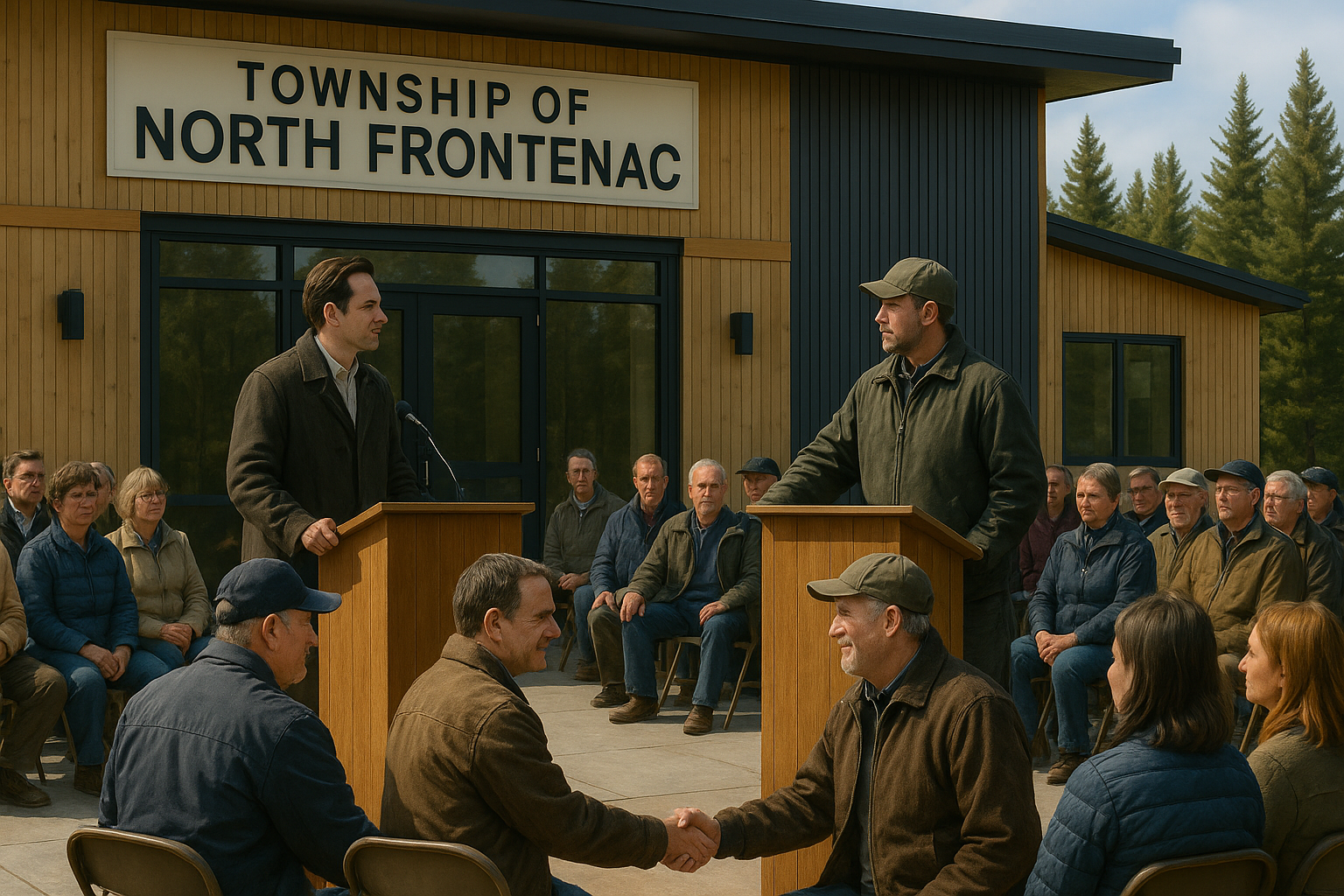
I also want to say something about how we speak to each other in Council chambers. No one has a right to talk to people the way some community members talked to our elected representatives. Disagreement is healthy; contempt is not. If you show up condescending and rude, you don’t strengthen your case — you erase it. We can be sharp on facts without being small to each other. The vote is important, but so is the example we set for the younger families we keep telling to stay.
There’s noise around how this arrived on the agenda. Council did not go shopping for this. The Economic Development Committee explored opportunities — exactly what committees are for — and reported back, just as the Housing Task Force does for housing. Committees scout. Council decides. Residents judge the result.
This week is a test of whether we want to fund the things we keep saying we want. If a deal can be written that meets the standard. Quiet, screened, safe, bonded, audited, and potentially overseen each year through a public, resident-led recommendation process. Do we want the revenue and the projects that come with it, or do we want to keep saying no because saying no feels simpler? One path funds tax relief, road fixes, brownfield restoration, better amenities, and a little breathing room for people trying to make a life here. The other path leaves us exactly where we are.
The vote lands Friday, October 31, 2025. Between now and then, argue like neighbours: with facts, with receipts, and with the humility to accept a recorded decision. If Council approves with the guardrails described here, that resident-led process—should Council adopt it—could turn controversy into visible wins. If Council says no, we still owe each other the courtesy of staying in the daylight. Either way, the standard doesn’t change: facts first, oversight always, and decisions that make life better for the people who live here.