
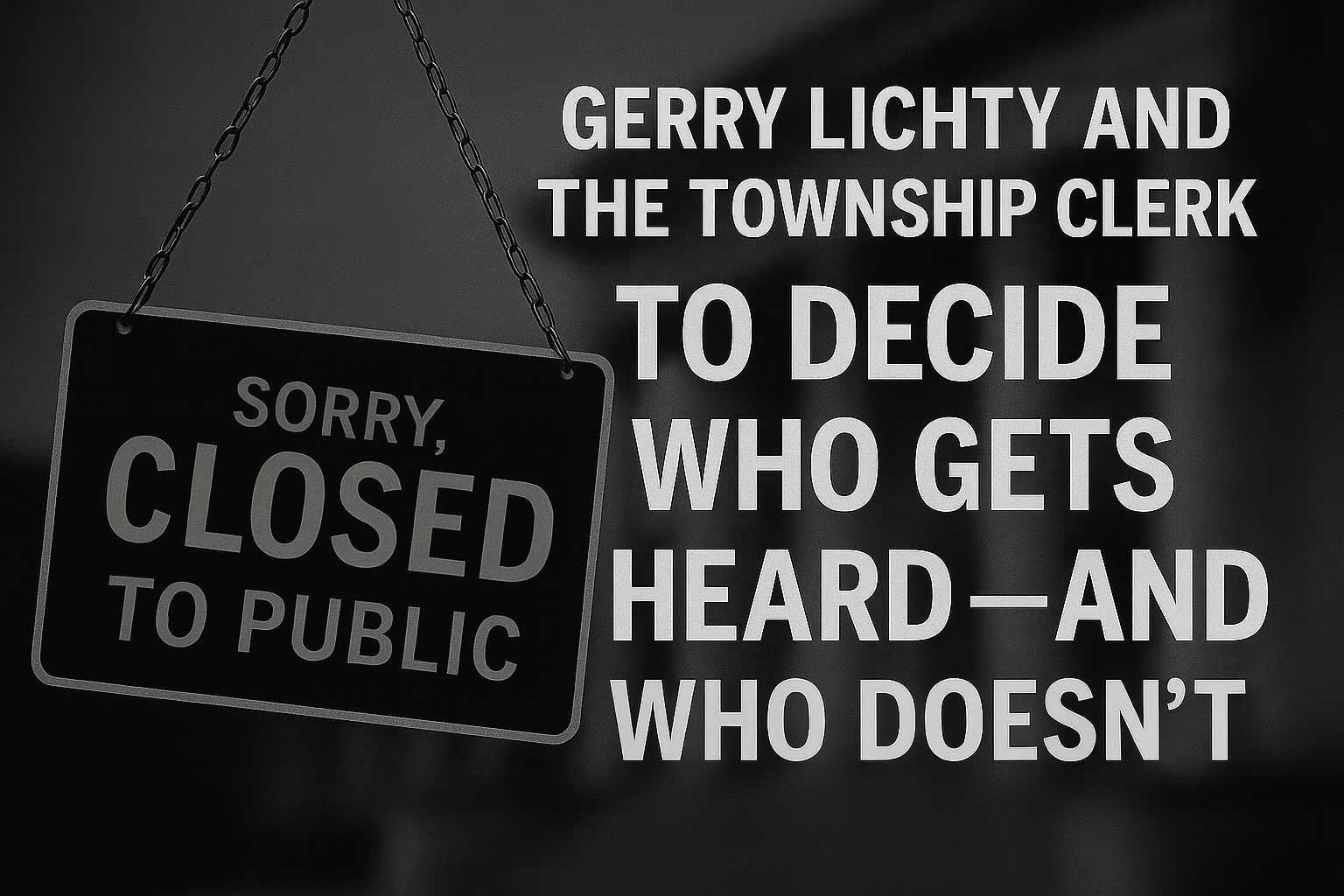
The Township of North Frontenac is preparing to pass sweeping changes to how Council meetings are run and how the public can participate.
On July 10, Council will vote on a proposed overhaul of its Procedural Policy. The new rules would significantly expand the Mayor and Clerk’s powers to screen public input, limit resident delegations, and control meeting conduct. On the surface, it may seem like routine housekeeping but the timing points to something more deliberate.
Just last month, Mayor Gerry Lichty began exercising new authority under Ontario’s Strong Mayor Powers, a framework originally created for large urban cities like Toronto and Ottawa. These powers weren’t voted in locally; they took effect automatically when the province expanded them to all municipalities with more than five council members, including ours.
Rather than minimize this power shift, Mayor Lichty formally delegated key authority, such as hiring department heads, to the CAO — signaling that the Township intends to use the new structure. Now, with the proposed procedural overhaul, the Mayor and Clerk are looking to lock in even tighter control over how, when, and if residents are heard.
This follows another troubling episode: Mayor Lichty’s vote to ban the swastika, taken in defiance of strong public opposition. A military veteran even pleaded with Council to uphold free speech. The Mayor did not listen.
Now, he’s building a system to ensure fewer voices reach the floor at all.
Public Participation? Pre-screened and Limited
Under the proposed rules, residents hoping to speak at a Council meeting will face tighter restrictions than ever before. Only two delegations will be permitted at each meeting, and each must submit their full presentation materials at least ten days in advance. The process is no longer about making your voice heard rather it’s about making your voice conform to administrative timelines and formats.
And even if residents jump through those hoops, there’s no guarantee they’ll be heard. The final decision now lies with the Township Clerk, who has full discretion to approve or deny a request to speak.
This is where the policy crosses a troubling line.
The Clerk: Unelected, Unaccountable, and Now in Control
The Clerk is not an elected official. They do not answer to voters. And yet, under this proposed policy, the Clerk becomes the gatekeeper for public access to Council — empowered to decide which residents get a voice, and which concerns are never heard at all.
There is no appeal process.
No mechanism for public review.
No requirement for justification.
This level of control raises serious questions about the role of administrative staff in democratic governance. Is it legal for an unelected civil servant to screen public speech at the municipal level? Possibly, the Municipal Act does offer townships broad leeway. But is it ethical? Is it democratic? Those questions deserve answers.
This isn’t just an internal administrative adjustment. It’s a structural barrier between the people and the people they elect.
Public Forum, Hollowed Out
The Public Forum has always been an open mic for local concerns — would also be stripped down. Going forward, residents would only be permitted to speak about topics already listed on the agenda.
This fundamentally changes the purpose of the Public Forum. It shifts it from a place where issues could be raised and new problems brought to light, into a tightly-scripted feedback session. If your concern isn’t already on the Township’s radar, it won’t be heard.
Expanded Authority for the Mayor — and Silence for Dissent
The proposed policy also grants the Chair of the meeting, almost always the Mayor, the authority to remove residents deemed “disruptive” or “out of order.” The policy does not define these terms. That vagueness leaves room for subjective enforcement, especially when emotions run high or unpopular opinions are voiced.
Paired with the Mayor’s recently confirmed powers under Ontario’s strong mayor legislation, it sets the stage for a lopsided dynamic. The Mayor has expanded authority and now gains the procedural tools to silence critics, eject dissenters, and limit who gets through the gate in the first place.
Big-City Powers, Small-Town Accountability Gap
North Frontenac was never intended to operate under the strong mayor framework. The powers were designed for large urban centres. But now that the Township qualifies under provincial rules, the Mayor holds powers our voters never directly approved and many still don’t fully understand.
Rather than resist that shift, the Township is embracing it — not through open discussion, but through backdoor procedure. The public didn’t get to vote on this direction. In most cases, they didn’t even know it was happening.
Now, the same Mayor who once ignored constituents during a controversial vote is helping implement a policy that ensures fewer of them get to speak at all.
Local Democracy Deserves Better
North Frontenac’s new procedural policy doesn’t just change how meetings are run. It changes who gets heard, who gets silenced, and who holds the keys to local government.
And in a democracy, those keys are supposed to belong to the people.
At NFNM, we’re not just reporting on these changes — we’re watching them. Closely.
And if public access continues to erode, we’ll be there to document every step.
Local democracy doesn’t die in darkness — it dies in silence.
And we won’t let that happen here.