You Got What You Voted For
By Donald Morton | North Frontenac News Media – NFNM | November 26, 2025
John Inglis, Trump, and the Canadian comfort zone
On a cold February morning in North Frontenac, then Deputy Mayor, now Councillor, John Inglis looked across the council table and called the sitting President of the United States a “neo-fascist dictator.”
He did it inside a township meeting, on the record, during debate on his own report titled “Response to U.S. Aggression.” The motion condemned what he described as American aggression toward Canada, warned against becoming “the 51st state,” and urged the township to look at “buy Canadian” policies in response to trade threats.
Mayor Gerry Lichty did not argue about tariffs. He questioned why a rural township council was labelling foreign presidents at all, and reminded council that their own rules caution against personal attacks on identifiable individuals. The motion still passed on a split recorded vote. The language stayed in the minutes.
If you want to understand the mentality of modern Canadian politics, you do not need a panel in Ottawa. You just need to watch that meeting.
The safe target
Calling Trump a fascist is one of the safest moves in the Canadian political playbook. It sounds brave. It signals your values. It almost guarantees applause. You can stand in a township hall, swing at an American president, and walk out feeling like you stood up for democracy. There is no cost. You will not lose contracts, permits, or government grants over it. In reality, fascism is not “a politician I dislike.” It is a system where the state controls the media, polices speech, blurs the line between government and party, and uses law as a weapon against opponents. Whatever you think of Trump, he has been elected and removed by elections and dragged through independent courts. Meanwhile, it is our own federal government that is tightening control over what news Canadians can see online, designing laws that allow house arrest for “harmful” speech, pushing digital ID toward the gate for benefits and services, and expanding the state’s ability to inspect mail and cut off internet access. If you want to talk seriously about authoritarian drift, you do not need to look south. You need to read our own legislation.
Meanwhile, the decisions that actually change North Frontenac happen in dry reports and legal text. Zoning bylaws. Site-specific exceptions. Long-term waste policy. Conflicts of interest. That is where residents get hurt or protected.
Inglis put his energy into both worlds. One is loud and symbolic. The other is quiet and permanent.
This audit is about how he has handled both, and what that says about us.
He did what he said he would do
Inglis did not hide his politics in 2022.
His candidate profile made it clear he wanted visible climate action. EV chargers. Climate impacts baked into emergency planning. Stronger protection against Muskoka-style overdevelopment by using lake capacity tools. Support for small specialty businesses that move here for lifestyle rather than big-box retail.
He has followed through on most of that.
He pushed hard on the Economic Development Task Force. He backed murals, tourism promotion and small business support. He talked about the real life of the landfill and the need to plan now for what comes next, instead of pretending the site will last forever. He was one of the few actively putting forward written proposals, not just reacting to staff reports.
If you voted for an activist councillor who treats township politics as a place to push climate symbolism and broader political statements, and who likes to experiment on the economic development side, that is exactly what you got.
The problem is not that he broke his word. The problem is that we never asked harder questions about where this style of politics leads.
Co-op thinking and the foresight gap
To understand Inglis, you have to understand the era he came out of.
In the early 1970s, rural co-ops like Lothlorian were pitched as creative ways to live differently on the land. Shared ownership. Shared decision making. A community in the forest, not just a subdivision on a grid. To make that kind of project legal, townships had to bend their rules and accept a new model that did not fit the simple one-lot, one-house pattern.
That kind of flexibility became part of the local identity. North Frontenac was the place that could find a way to say yes to something unusual if the story sounded good and the people seemed earnest.
Fifty years later, “rural co-operative” is now a planning term with legal weight. Once it is in the toolbox, it can be picked up for other projects. Not every new file looks like the original dream. Some are denser. Some are on shorelines instead of inland. Some arrive wrapped in thick planning reports rather than idealism.
You can draw a line between that earlier co-op mentality and the way Inglis looks at land use and business today. He is comfortable with experiments. He likes people who want to do things a bit differently. He sees himself as part of that tradition.
That is not automatically bad. It becomes a problem when no one around him is playing the other side of the board, asking how today’s exceptions will be used tomorrow, and where the hard red lines should be.
Strengths and weaknesses on the record
On the positive side, Inglis has done more homework than many councillors.
He prepares written reports. He brings motions instead of waiting for staff. He raises longer term issues like landfill life, lake capacity and climate resilience. He is clearly engaged. He has helped keep small community services alive. He pushes for more than bare-minimum roads and plow trucks.
On the negative side, he has a habit of dragging national politics into a local room and speaking in ways that blur opinion with authority.
Calling the U.S. president a neo-fascist dictator, from the council table, inside a motion that speaks in the voice of North Frontenac, crosses that line. It turns a small township into a stage for a personal view on global politics. It also feeds the Canadian reflex that says the real threat is always somewhere else, usually south of the border.
The record shows another weakness. Inglis is often the only one putting forward concrete ideas. In a vacuum, the person who writes the motion sets the direction. Even a flawed idea can look like leadership if it is the only thing on the table. That is not entirely his fault. It is also a failure of the rest of council and the public to send their own proposals in.
But voters do not get to step back from the result. If you keep sending the same style of politician into that vacuum, you will keep getting the same type of decisions.
Audit conclusion
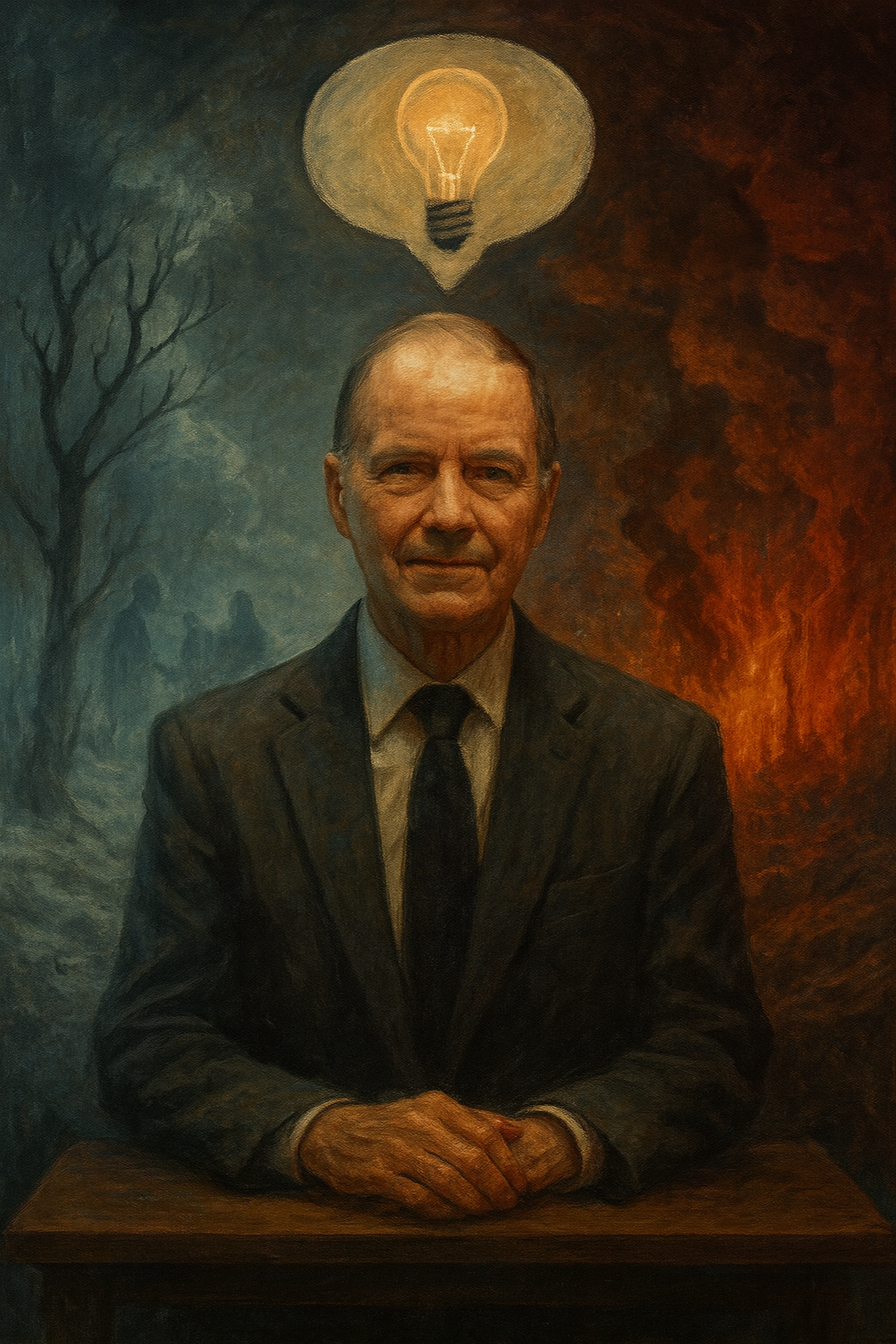
In the end, this audit lands in one place: John Inglis is exactly who he told voters he was, an earnest idea-driven councillor who mixes national grandstanding with local experiments, strong on passion and weak on foresight, and North Frontenac now has to decide whether that trade-off is acceptable or whether the next election should finally reward people who focus less on denouncing foreign presidents and more on tightening bylaws and planning twenty years ahead.
References / Documents of Interest
- Frontenac News – “North Frontenac supports motion condemning ‘US aggression towards Canada,’ but vote is split” https://frontenacnews.ca/article.php?id=17896
- Frontenac News – “Meet the candidates – North Frontenac Municipal Election 2022” https://frontenacnews.ca/article.php?id=15967
- Township of North Frontenac – Council minutes and agenda packages (2022–2025) https://www.northfrontenac.com/en/township-services/agendas-and-minutes.aspx
- EngageFrontenac – Ompah Palmerston Cottage Co-operative OPA/ZBLA project page (general co-op precedent context) https://engagefrontenac.ca/ompah-palmerston-cottage-co-operative-official-plan-amendment-and-zoning-by-law-amendment
- Foundation for Intentional Community – “Lothlorien Farm (Lothlorien Rural Co-op)” profile https://www.ic.org/directory/lothlorien-rural-co-op/