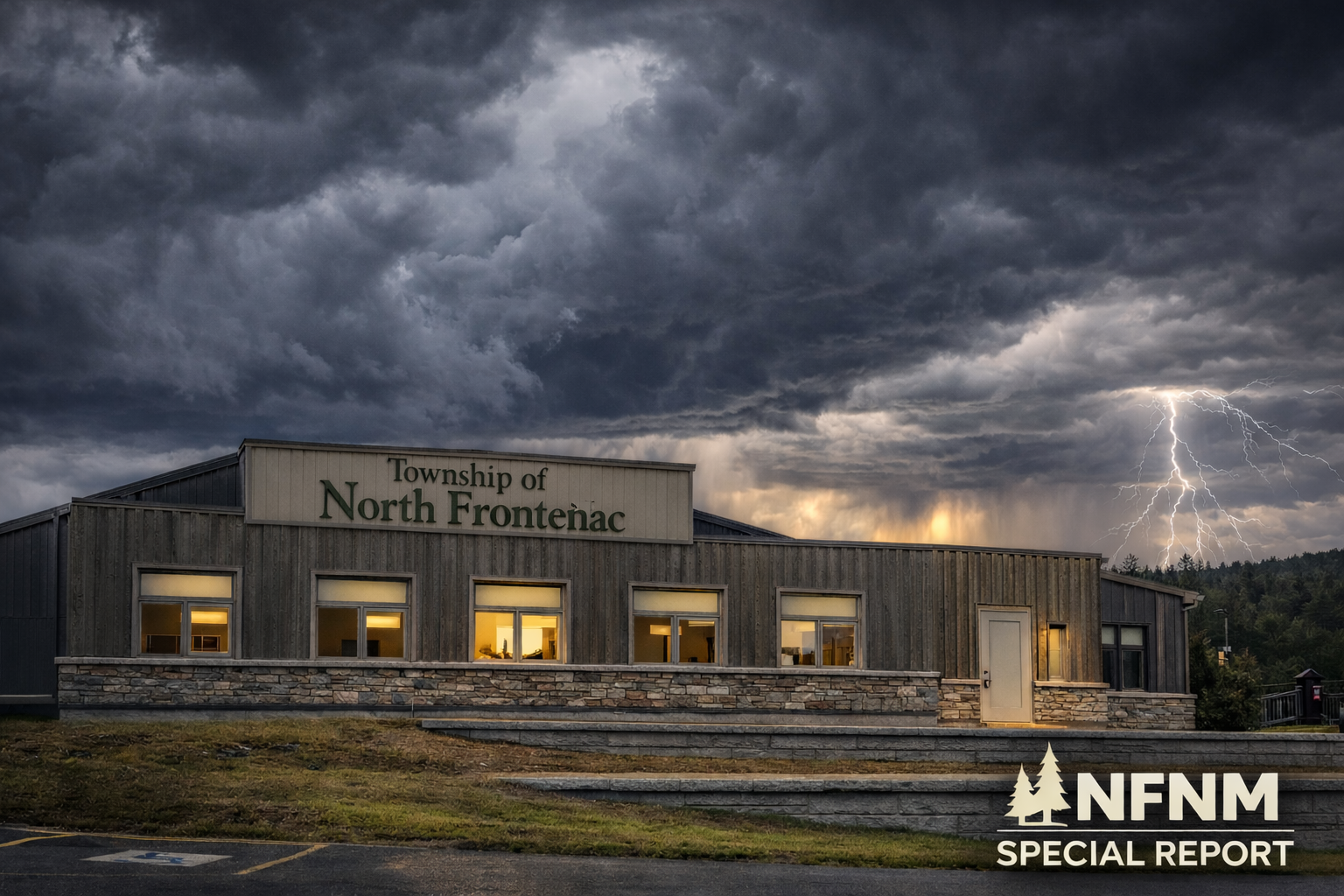
storm on the horizon802 words3–5 minutesDonald MortonFebruary 24, 2026North Frontenac is moving into its next chapter. A new council will be elected soon, and very real changes are on the horizon for this township. This is the time to look forward, not backward. If local conversation stays stuck on old fights, old personalities, and old grudges, then people will miss the decisions that are coming next. What we talk about now matters because it shapes what this community is prepared to defend, question, and understand before the next round of major changes arrives.
One of those issues is Crotch Lake, and people in North Frontenac should be paying close attention to it now. This is not just a lake people enjoy. It is a major tourism area, a major crown land camping draw, and part of the local economy that keeps money moving through the township. Visitors come here for places like Frontenac Provincial Park, and the ministry-managed camping and boat launches that keep people in the water.
When crown land is under pressure, lakes go with it.
The Ontario government has been working on a Crown Land Use Policy for several years. That policy is supposed to come into effect soon. When it does, it will reshape what public land can be used for, what activities are permitted, how Indigenous communities are involved, and what happens to the places North Frontenac residents consider essential. The timeline is real. The stakes are high. The ability of a township to have a say in what happens to public land has shrunk over decades, and it will not come back larger.
Crotch Lake is likely to be an early test of what the new Crown Land Use Policy actually means in practice.
North Frontenac should already be in conversation with the province about what that policy change means. The township should have a voice in this decision. Instead, the only conversations happening are the private ones. People talk about their lake access in kitchens and around campfires, but not at the council table where it matters.
Some of that is a resources problem. Municipal governments have less money and smaller staff. Some of it is a capacity problem. Council is already dealing with multiple files. But some of it is also a priorities problem, and that is where citizens come in.
Here is what matters: Crotch Lake is a shared resource. It does not belong to one cottage or one bay. It is a place that exists because people care about having access to it. That care is what creates the force that protects it.
That force needs to be visible now, and not after a decision is made.
The second issue is related to the first. North Frontenac is in a stage of life where outside money is drying up, and the township is learning to fund itself. This is not a statement about being poor. This is a statement about growth. A small rural municipality cannot grow its tax base the way a suburb can. It has to be more creative, and more deliberate, and more willing to shift what gets funded. That means choices. Some things get more resources. Some things get less.
Over the next decade, those choices will reshape what North Frontenac is able to do, who it is able to help, and what parts of local life get protected. That is not a disaster. It is a reset. But resets can go in different directions, and the direction depends on what people are talking about and paying attention to.
The third issue is reconciliation. North Frontenac is on Algonquin territory. The early chapters of that relationship have involved consultation and presentation. The next chapters are going to involve something deeper. How are decisions made? Who benefits? What does consent look like when the stakes matter? Those are not abstract questions. They shape whether roads get built, what happens to water, and how public land gets used.
Right now, North Frontenac is not in meaningful conversation about any of these things. Council is holding steady on what it can control. Staff is keeping the lights on. Residents are watching Facebook, and waiting to see what happens next.
The missing piece is conversation. Not the chat room kind. The kind where people sit down with a real map, a timeline, the facts that exist, and the questions that matter. That conversation is starting to happen in Frontenac County. It is not happening in North Frontenac yet.
The point of this article is not to blame anyone. The township is navigating real constraints. But constraints do not change the fact that the next few decisions about crown land use, municipal funding, and reconciliation are big ones. They will shape this community for years.
If North Frontenac stays divided on old fights, then the community will not be ready for the decisions that are coming. People will show up to council and repeat the patterns they have already shown. They will not be prepared to ask the new questions that the new moment demands.
That is the risk. It is also still avoidable. If residents and council refocus on what matters now, then North Frontenac can move into the next chapter with a clearer sense of what it is defending, and why.