
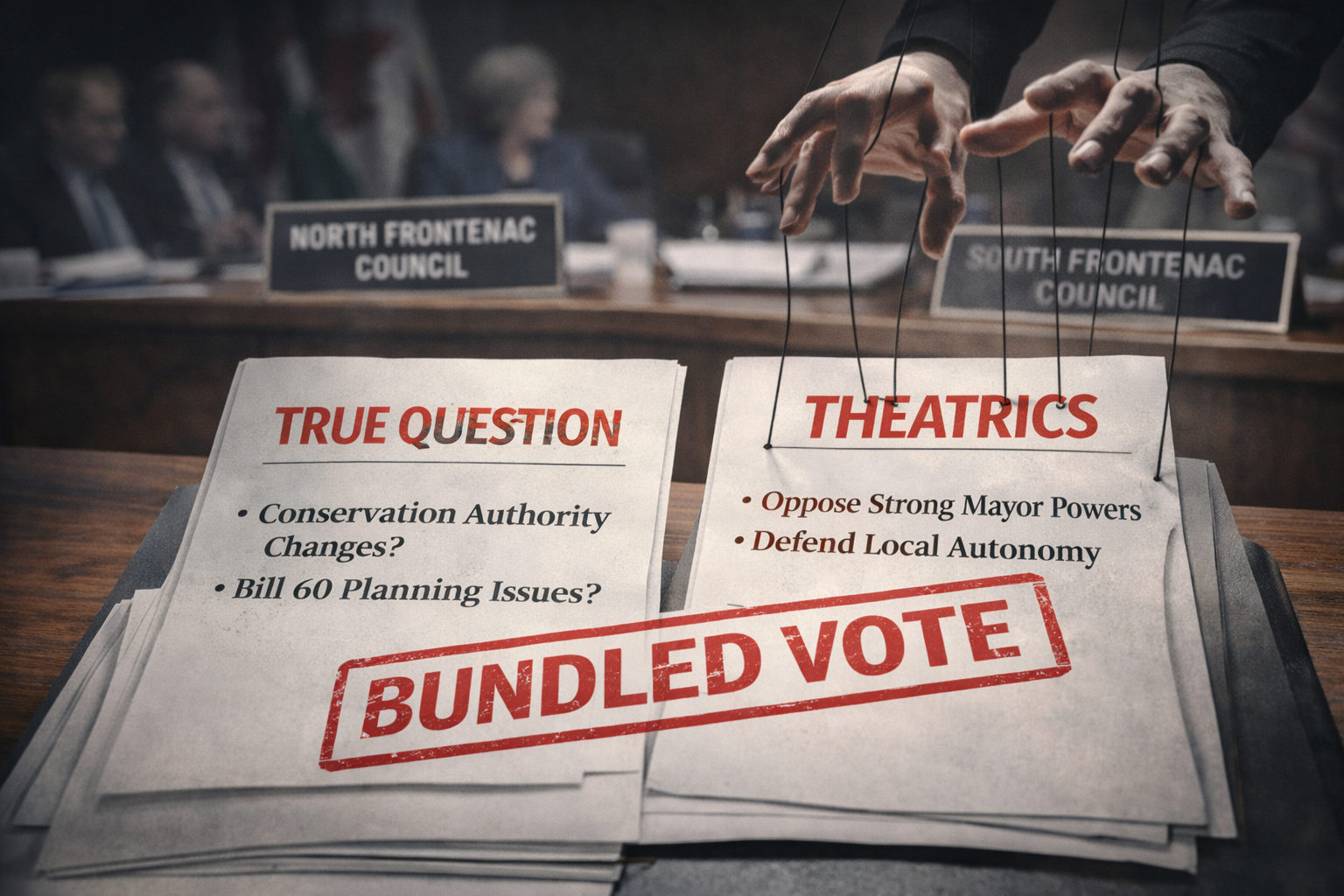
South Frontenac has sent North Frontenac a “Defend Local Autonomy” resolution asking for regional support. It bundles three separate issues into a single package: strong mayor powers, Conservation Authority restructuring, and Bill 60 planning changes.
That packaging is the story.
This is a bundled pressure vote designed to drag a controversial claim along with two easier ones, then stamp the result onto the public record as regional agreement.
South Frontenac’s narrative is written to travel
South Frontenac’s wording ties the three topics into one storyline. It frames them together as a “systematic erosion” theme, then treats the measures as coordinated, rather than separate questions.
That is the point of a bundle. It turns three debates into one political product that can be shipped to other councils for endorsement.
North Frontenac’s agenda repeats the package and asks for blanket support
North Frontenac’s agenda item mirrors that same packaging and asks council to support the objections as a whole.
That creates a record problem. A single vote cannot show three separate opinions. Residents reading the minutes later will not be able to tell where council stood on each item. They will only see whether North Frontenac endorsed South Frontenac’s package.
This is how a messy argument gets cleaned up into a simple yes or no headline, at the expense of truth.
Strong mayor powers got packaged into the wrong fight
South Frontenac’s text frames strong mayor powers as a threat to local democracy and an attack on deliberation.
North Frontenac has lived under the same framework and residents have seen a different result. Strong mayor powers function as a speed tool after council has debated and settled direction, especially around housing and land development. In a rural township, delay is its own form of failure. When the process drags, costs climb and projects die.
South Frontenac is entitled to dislike the model. The issue is the method. They bundled their strong mayor argument into a three part package and asked neighbouring councils to sign it.
The bundle forces a lose lose vote for a truthful record
A councillor can agree with South Frontenac on Bill 60 or Conservation Authorities and still reject their framing on strong mayor powers. The package vote wipes that out.
Support the package, and North Frontenac gets counted as backing South Frontenac’s full story about strong mayor powers. Reject the package, and the rejection gets spun as refusing to defend local autonomy, even if the dispute sits mainly with the strong mayor section.
That is why bundling is used. It turns separate issues into one forced alignment.
What North Frontenac is deciding today
This agenda item asks North Frontenac to accept South Frontenac’s three part narrative as written, through one motion.
Residents should recognize what they are watching. This is how councils get pushed into adopting someone else’s framing. It happens through bundling, convenience, and a vote that flattens the record.
If South Frontenac wanted honest regional dialogue, they would have separated the issues and asked for support one at a time. This package was built to pressure councils into endorsing a storyline.
That is the tactic. That is the problem.