A New Stage for Local Watchdog Journalism
In small towns, public information rarely moves in a straight line. A meeting happens, a decision is made, and the first version of events often reaches people through familiar voices long before most residents ever see the record itself. What is technically public and what is practically accessible are often two different things. A document can exist on paper, sit somewhere on an official website, and still remain distant from the people expected to live under the decision inside it.
North Frontenac has its own version of that problem. Like many rural communities, it has long relied on a mix of official summaries, Facebook discussion, local relationships, and institutional habit to move information around. People trust what feels familiar. They trust what arrives first. They trust what sounds settled. Meanwhile, the fuller record often sits in the background, available in theory but awkward in practice. When that happens, the public depends more on interpretation than on direct access.
NFNM began by pushing against that pattern through direct reporting, public records, and a willingness to stay with local issues longer than most outlets do. That work is continuing. It is also changing shape. A new phase has begun, and it moves beyond the article alone.
Beyond the Article
Good reporting still matters. Context matters. Investigation matters. A journalist can follow timelines, compare statements, and place local events into sharper focus. That work remains central. At the same time, reporting by itself does not solve the access problem. Even honest reporting still leaves residents relying on somebody else’s summary unless they can reach the source material with reasonable ease.
A stronger local information culture gives people both. It gives them journalism with context, and it gives them a cleaner path to the public record underneath it. That is where nfnm.tv now enters the picture.
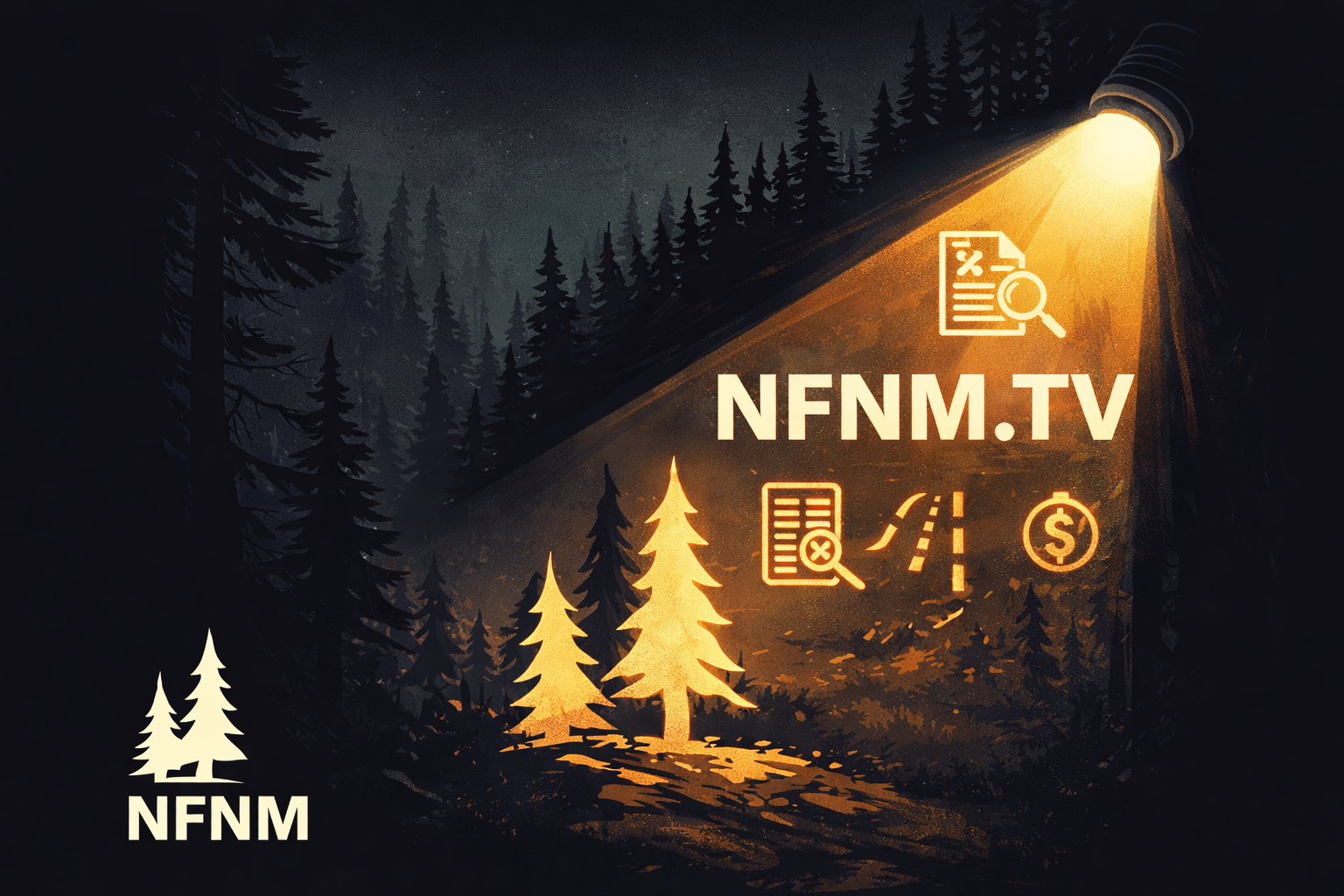
NFNM is now building and hosting free public tools designed to make local civic information easier to reach, easier to search, and easier to use. So far, that includes records, roads, budgets, and staff wages, with more still being added. Agendas, minutes, financial material, road-related information, and staffing data all become more useful when ordinary residents can move through them without fighting scattered archives, clumsy navigation, or needless friction. A public record should not feel hidden simply because it has been poorly presented.
The Small-Town Filter
In rural communities, information often passes through a social filter before it reaches the wider public in full form. One source is treated as credible on instinct. Another is dismissed on instinct. One version of events spreads quickly because it came through familiar hands. Another struggles because it arrived through the wrong person or disrupted the wrong comfort zone.
This does not always happen through some deliberate effort to control the narrative. In many cases, it is simply habit. People are busy. They do not have time to sit through long meetings, chase old resolutions, or dig through layers of municipal pages. They rely on shortcuts. Over time, those shortcuts begin shaping public understanding more than the record itself.
Once that pattern settles in, the issue is no longer just whether records exist. The issue becomes who can reach them easily, who gets to interpret them first, and whose version enters local memory before the fuller picture emerges. Independent local media changes some of that by reporting more directly. Public tools push it further by giving residents a more direct relationship with the record itself.
Building Access in Public
The next step for NFNM was clear. If transparency is worth defending, it should be easier to use. Public access should mean more than a file sitting somewhere on a government website. It should include structure, usability, and a shorter path between residents and the information created in their name.
The tools now being hosted on nfnm.tv are part of that shift. They are not separate from the journalism. They extend the same watchdog approach that built NFNM in the first place. Reporting draws attention to the issue. Public tools help residents inspect the foundation underneath it for themselves.
For North Frontenac, this creates a different kind of local media presence. NFNM is no longer only documenting the information environment around local government and community issues. It is starting to build around some of the weak points in that environment by reducing friction and making public records feel more public in everyday use. The records tool, the roads tool, the budget tool, and the staff wages tool are the beginning of that effort, not the end of it.
A Different Role for NFNM
Better access does not erase disagreement. Residents can read the same document and still come away with different conclusions. Local politics will remain messy, personalities will still clash, and some debates will stay unresolved because the disagreement itself is real.
What changes is the starting point. A resident who can reach records more easily has more independence than one who relies mainly on second-hand explanation. A resident who can compare a public summary against the underlying material stands on firmer ground than one who only hears fragments after the fact. A resident who can trace a decision across multiple records is harder to mislead through omission, selective framing, or social spin.
This phase matters because it changes what NFNM is becoming. The work no longer ends with exposing weak points and publishing an article about them. It now includes building some of the access infrastructure around the reporting itself. The article still matters, but it is no longer carrying the full weight alone.
North Frontenac does not need more layers between the public and the record. It needs fewer barriers, less friction, and a clearer route between civic decisions and civic understanding. NFNM has entered a new phase because the work now reaches beyond reporting what is broken. It includes building a better path through nfnm.tv.