
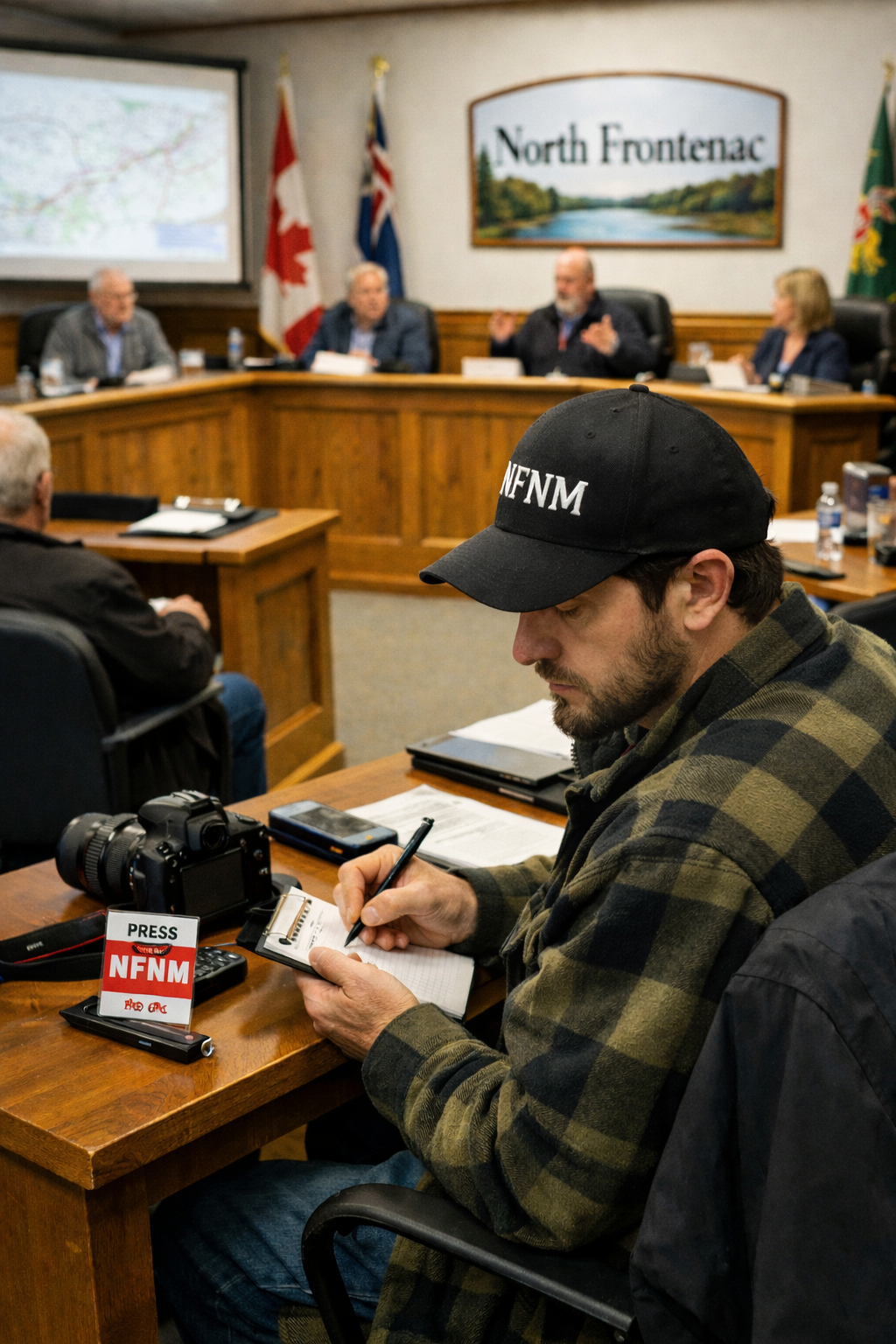
Council was good today.
The Alto high-speed rail topic came up in a way that matters for North Frontenac. South Frontenac wanted us to endorse their letter to the province, the federal government, and MPs. The letter basically says North Frontenac agrees with their opinion that the corridor should be in the Kingston transportation hub instead of running through rural Ontario.
Our council disagreed with the letter as it was presented.
John Inglis was assertive that South Frontenac’s letter is coming from a place of misdirection. He raised the point that the corridor decision is effectively already out of municipal hands. His view was that it will go wherever Alto decides is the best fit. He also pointed to the potential that it could run alongside the Highway 7 corridor, with a potential stop in Sharbot Lake. Inglis described the project as coming whether we like it or not, and he called it a waste of time and resources to re-hash the Kingston corridor argument again.
Inglis also stated, echoed by Kelly Willis in the public forum (who attended an Alto meeting), that the “information sessions” Alto is putting on are exactly that: information sessions for the public to receive information.
Inglis then suggested North Frontenac change the wording around endorsement. The revised direction was more along the lines of: North Frontenac does not oppose the project, but strict guidelines and real community improvement packages need to be discussed for all communities affected. That is a statement NFNM can agree with, considering our coverage on how reconciliation and Indigenous communities are being compensated while the rest of Canadian communities are expected to settle for less.
Councillor Good agreed with the core point that it is coming regardless, and we would be unwise to ignore it instead of setting requirements Alto has to stand by. North Frontenac has a responsibility to protect what makes this place what it is: environment, lakes, trails, and rivers. That responsibility was clearly on the table today, and council signaled it will defend that commitment to the best of its ability.
Another important point was raised in plain terms. South Frontenac does not want it down there. If North Frontenac endorses their letter as written, it effectively positions us as helping push the corridor away from them and toward us. That puts North Frontenac between a rock and a hard place. Councillor Fowler, overall, agreed that North Frontenac should reword what South Frontenac asked us to endorse, rather than signing onto it as-is.
I spoke in the Public Forum and reiterated a basic point: North Frontenac has a voice, and it should use it. Depending on South Frontenac to speak for us does not match who we are.
Two clubs also made back-to-back delegations that caught my attention: the ATV Club and the Motorcycle Club. One reported they are losing numbers. One reported they are growing. Both asked for a reduction in trail fees. Councillor Fowler pushed for a recorded vote on the matter and was keen to address the way the motion was worded, to the point of considering a point of order. NFNM will be looking into these clubs more as 2026 progresses.
The septic inspection program was another item worth watching. The spirit of the report did not come through as clearly in the delegation as it could have, but the point still stands. Ten percent participation might look better than previous years, and it might look “good” on paper, but it is not a number to pat anyone on the back about. Council accepted the information, and there was some discussion about working more closely with lake associations to get them actively involved in raising volunteer participation.
This is black and white. If people do not volunteer inspection, it becomes mandatory. Nobody wants that. People will be more willing when this is framed properly as lake stewardship, and as a responsibility that comes with living on and enjoying these lakes.
One thing that caught my ear came during Kelly Watkins’ overview of the township’s financial profiles. One of our biggest concerns is overdue bills, back taxes, and accounts that do not get paid. The connecting dot for me was simple. This is not just defiance. A portion of it looks like people cannot afford to pay. There is no use fining people if they will not pay it.
Another point raised in the meeting was that some of the people not paying are people who feel wronged, or who have a sour taste in their mouth with the township over one issue or another. That matters when you start talking about programs like septic compliance, where costs can get expensive quickly. Fines do not fix fear. Fines do not fix poverty. Fines do not create trust.
From a watchdog journalist perspective, the easy answer here is fear and lack of incentive. Let’s be real. If you are afraid your septic might not pass, nobody with a brain volunteers to show authorities a system they already suspect needs fixing, especially when they cannot afford the fix. Art Hannigan addressed this fear response and how to combat it in an article he wrote. I’ll source it at the bottom.
Sources
- Art Hannigan, article on fear response: https://nfnm.tv/nfnm-community-voices-understanding-fear-a-tool-for-survival-or-control/