For years now, Council has circled around short-term rentals without landing on a decision. Reports have been written, comparisons made, and resolutions passed, but on the ground, nothing has changed. In North Frontenac today, Airbnb and similar platforms are operating unchecked.
Let’s be honest about what they are: businesses in disguise. They run in residential zones without licenses, without commercial taxes, and without the oversight every legitimate business here follows. If you run a lodge, campground, or Motel, you’ve played by the rules; if you run an Airbnb out of a cottage in a residential zone, you haven’t — and that’s not fair to anyone doing it legally. It’s time to be real about this.
The Airbnb Effect on Housing
Airbnb thrives on the fact that anyone can do it. That means investors can swoop in, buy cottages under the guise of “home ownership,” and immediately flip them into businesses. It’s happening across Ontario, and it’s driving up property values. Local small business who run airbnb’s have to be able to see this dark side of STR’s. We can work together before few ruin a good thing for all.
Studies show that in markets with heavy STR activity, housing costs rise measurably. McGill University researchers estimate more than 30,000 Canadian homes have already been taken out of the long-term housing market for STR use. Even a small increase in STR activity can inflate property prices by several percent. Here in cottage country, where supply is already tight, that makes a huge difference.
What does that mean for us? It means local people — our kids, our grandkids, our neighbours — are outbid before they even have a chance. It means first-time buyers are priced out, while absentee investors turn homes into revolving hotel rooms. And it means that even local families who rent out their cottages are, knowingly or not, part of the same process. it needs to be reiterated, this is not a war on small business owners or cottagers wanting a little extra income. in fact it’s the opposite. The township and local business operators need to work together more than ever. for the greater good of North Frontenac. Against corporate owned Airbnb’s.
Three Dwellings Per Property: A Double-Edged Sword
This fall, Council is preparing to amend the Official Plan to allow up to three dwellings per property. On paper, it’s a hopeful move. Families could add in-law suites or tiny homes, giving younger generations a foothold in North Frontenac. For many, it could be the first realistic path to home ownership here in years.
But without an STR by-law, this amendment risks backfiring. What was meant to expand housing could just as easily accelerate speculation. Why build a home for family when you can build two STR units and double your nightly rates? Unless Council makes a clear distinction between housing for residents and housing for rentals, the new policy could hand corporations an open door to multiply their profits while squeezing locals even further out.
Not About Local Business — It’s About Fairness
Some STR operators will argue this is about “taking away income from locals.” It isn’t. It’s about fairness.
Local tourism businesses like campgrounds, resorts, motels, B&Bs have invested in this community for decades. They pay commercial taxes. They hire staff. They follow fire codes, septic rules, and health and safety inspections. STRs don’t.
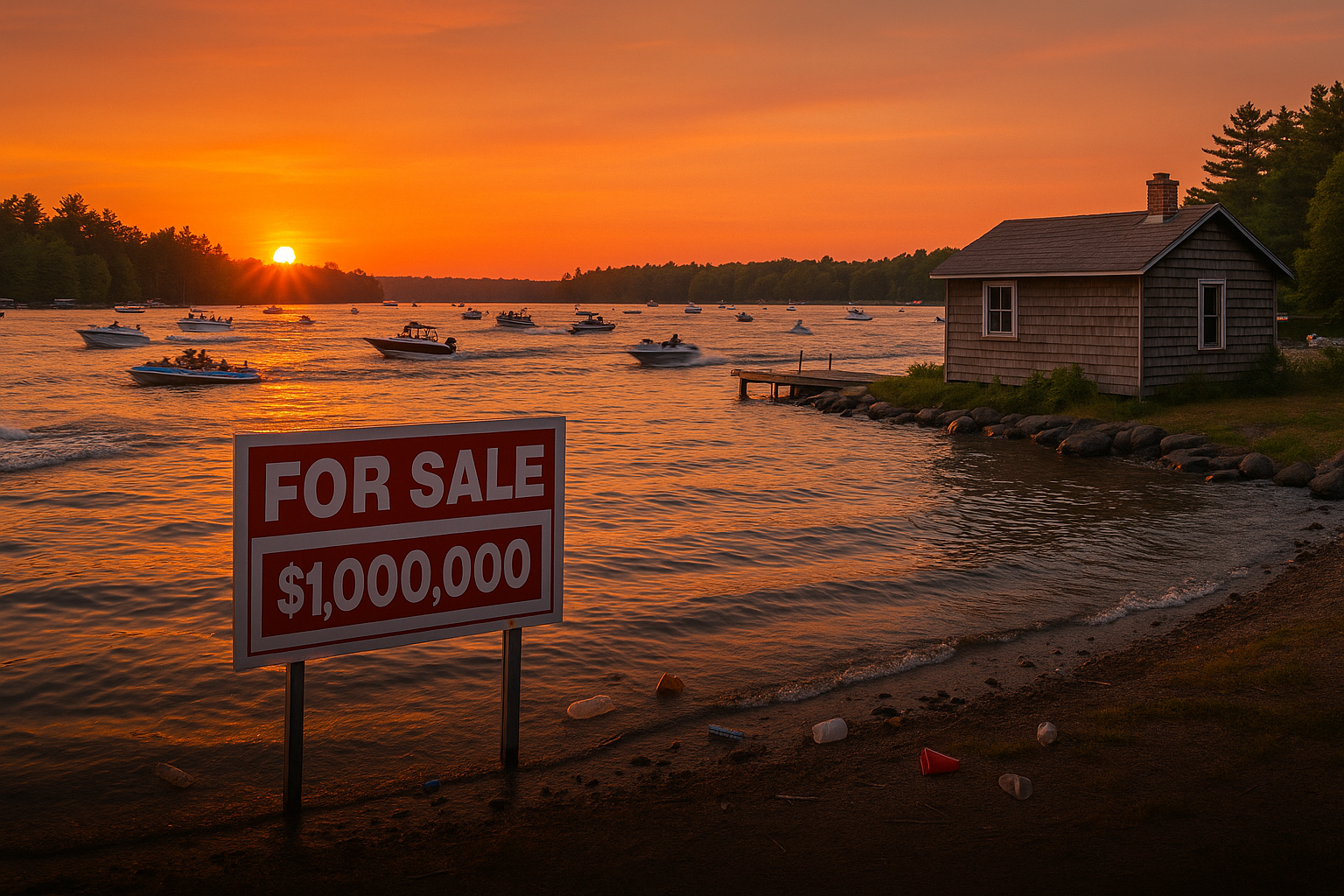
And when STRs are allowed to run unchecked, it isn’t just unfair to businesses, it’s unfair to every resident. It erodes neighbourhood peace, overloads septic systems, crowds our lakes, strains the environment — and most importantly — pushes property values beyond reach.
This isn’t about banning short-term rentals altogether. It’s about being honest: if you’re running a business, you need to play by business rules. That means licensing, fees, inspections, and zoning compliance — the same standards every other business faces.
What Tiny Township proved
A small rural municipality on Georgian Bay decided to stop spinning its wheels.
They licensed and capped STRs. Tiny set a hard ceiling of 300 licences and runs zero-tolerance enforcement. Occupancy is limited (e.g., maximum 2 renters per licensed bedroom and max 10 renters at any time), minimum stay rules apply, and rentals are capped at 92 days per year.
They funded enforcement with real fees. Tiny raised the annual STR licence fee to $1,750 to keep the program cost-neutral for taxpayers.
A court backed them up. On March 24, 2025, the Ontario Superior Court dismissed a challenge to Tiny’s licensing by-law, confirming municipalities can regulate and license STRs. Precedent is set.
Complaints fell. After licensing, STR-related violations trended down — a tangible quality-of-life win for residents.
Tiny’s lesson for North Frontenac is simple: you can regulate, you can enforce, and you can win in court — while keeping responsible, small-scale renting alive.
Others have moved, too
Muskoka Lakes licenses STRs township-wide and ties approvals to septic capacity and fire safety — with a formal intake window and clear compliance rules.
Prince Edward County has run a licensing system since 2018 and paused “whole-home” licences when saturation risked housing stock — proving small municipalities can manage volume and protect locals.
North Frontenac’s path — before the 3-dwellings change lands
We don’t need to reinvent anything. We need to decide:
License STRs and set a cap sized for our lakes and roads. Tie each licence to septic capacity, parking, fire safety, and a local 24/7 contact. (Tiny did this with zero-tolerance.)
Set fees to fund enforcement so taxpayers aren’t subsidizing STRs. (Tiny: $1,750/year.)
Adopt Administrative Monetary Penalties (AMPs) so fines stay local and the model pays for itself.
Protect residential zoning by acknowledging reality: STRs are commercial activity. If you operate commercially, you meet commercial-grade rules — that’s how we keep it fair for legitimate operators and for neighbours.
Our land and lakes are worth more than quick profit. If we want people to live here — not merely visit — we need to match the three-dwellings opportunity with an STR framework that stops speculation from swallowing it. Tiny Township just showed every rural council in Ontario how to do it — and how to defend it.
References
- McGill University/CMHC: Estimated that approximately 31,000 Canadian homes have been taken off the long-term market for short-term rentals
- Impact of Airbnb on housing prices and rents: A 1% increase in Airbnb listings is linked to a ~0.026% rise in house prices
- Tiny Township STR licensing: Capped at 300 licences, enforcement details
- Licence fee raised to $1,750
- Ontario court upholds Tiny’s STR by-law (March 24, 2025)
- STR complaints declined after licensing
- Muskoka Lakes STR program
- Prince Edward County licensing history (2018 onward)