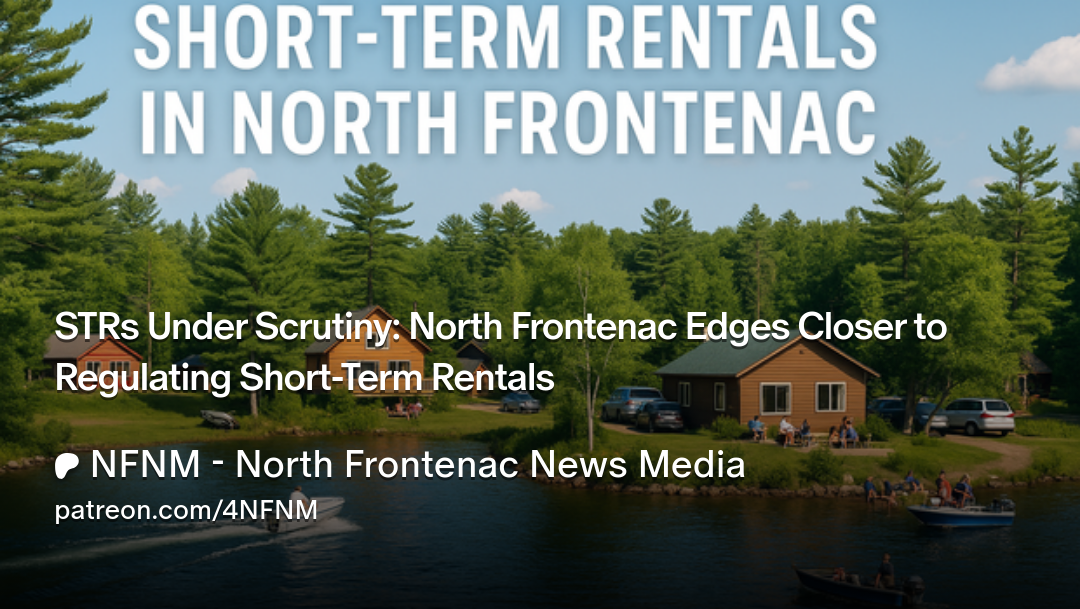
North Frontenac is inching toward regulating short-term rentals (STRs) in what may become one of the township’s most contentious land use and environmental decisions in years.
At the June 24, 2025 Environmental Task Force (ETF) meeting, the sub-committee on short-term accommodations presented a case for action, calling for a clear bylaw to manage the growing number of STRs—many of which are run as commercial operations under residential zoning.
A Growing Problem, Unchecked
Citing research from McGill University and a detailed local survey conducted by the North Frontenac Lake Association Alliance (NFLAA), the report noted STRs in rural Ontario are growing twice as fast as in urban centres. In North Frontenac, the trend is sharper still.
“There is now a marked trend toward STR properties being owned and managed by companies rather than individual property owners,” the report stated. “NF is not immune.”
Without municipal oversight, the report warns, the community risks a future where commercial vacation rentals dominate lakeshore properties—often with little regard for environmental or social consequences.
Environmental and Infrastructure Concerns
The ETF didn’t mince words: aging and undersized septic systems are being pushed beyond their limits by high-occupancy turnover in unregulated rentals. Many systems were never designed for large guest groups, let alone sustained peak use across multiple summer weekends.
The risks? Septic effluent contaminating groundwater, wells, and lakes. Shoreline erosion from excessive boat traffic. The spread of invasive species. And a fundamental reshaping of local ecosystems.
“Unregulated STRs are expected to have broad long-term negative impacts on our lake environments,” the report warned.
STRs vs. Local Tourism Operators
Another sore spot is economic fairness. The current system lets STR operators avoid the costs, taxes, and safety requirements faced by motels, resorts, and lodges. That, according to the ETF, gives STRs an unfair advantage—and funnels profits out of the community.
The report called for a framework that treats STRs as what many now are: businesses.
Political Hesitation vs Community Pressure
While the sub-committee is pushing for a draft bylaw, there’s still reluctance at the council level to act. Deputy Mayor John Inglis and head of the North Frontenac lake association alliance, Bruce Moore, emphasized the need for council endorsement before investing further effort into bylaw drafting, noting staff time, enforcement logistics, and financial modelling are still outstanding.
Council passed Resolution #191-25, asking the ETF to continue its investigation, but stopped short of directing staff to begin drafting regulation. The ball remains in the Task Force’s court—for now.
Meanwhile, the NFLAA says it’s ready to help.
“We can now leverage the knowledge gained by others to implement an approach tailored to our situation,” the sub-committee’s report concluded. “No amount of work on our part, however, can be productive unless there is political will to pursue this matter.”
Bottom Line: What Comes Next?
59 municipalities across Ontario already have STR bylaws. North Frontenac isn’t among them—yet.
Council has now acknowledged the issue and accepted the Environmental Task Force’s call to investigate further. Whether that turns into meaningful regulation—or dies in committee—will depend on public pressure, political will, and the next moves by STR operators themselves.
Until then, NFNM will keep following the story.