An issue BESS not slept on
By Donald Morton Jr. | North Frontenac News Media (NFNM) | Monday October 20 2025
There’s a petition in circulation about the proposed Battery Energy Storage System. There’s concern, frustration, and a lot of unanswered questions. I’ve heard them all. So has Rob Lesperance — the man behind that petition.
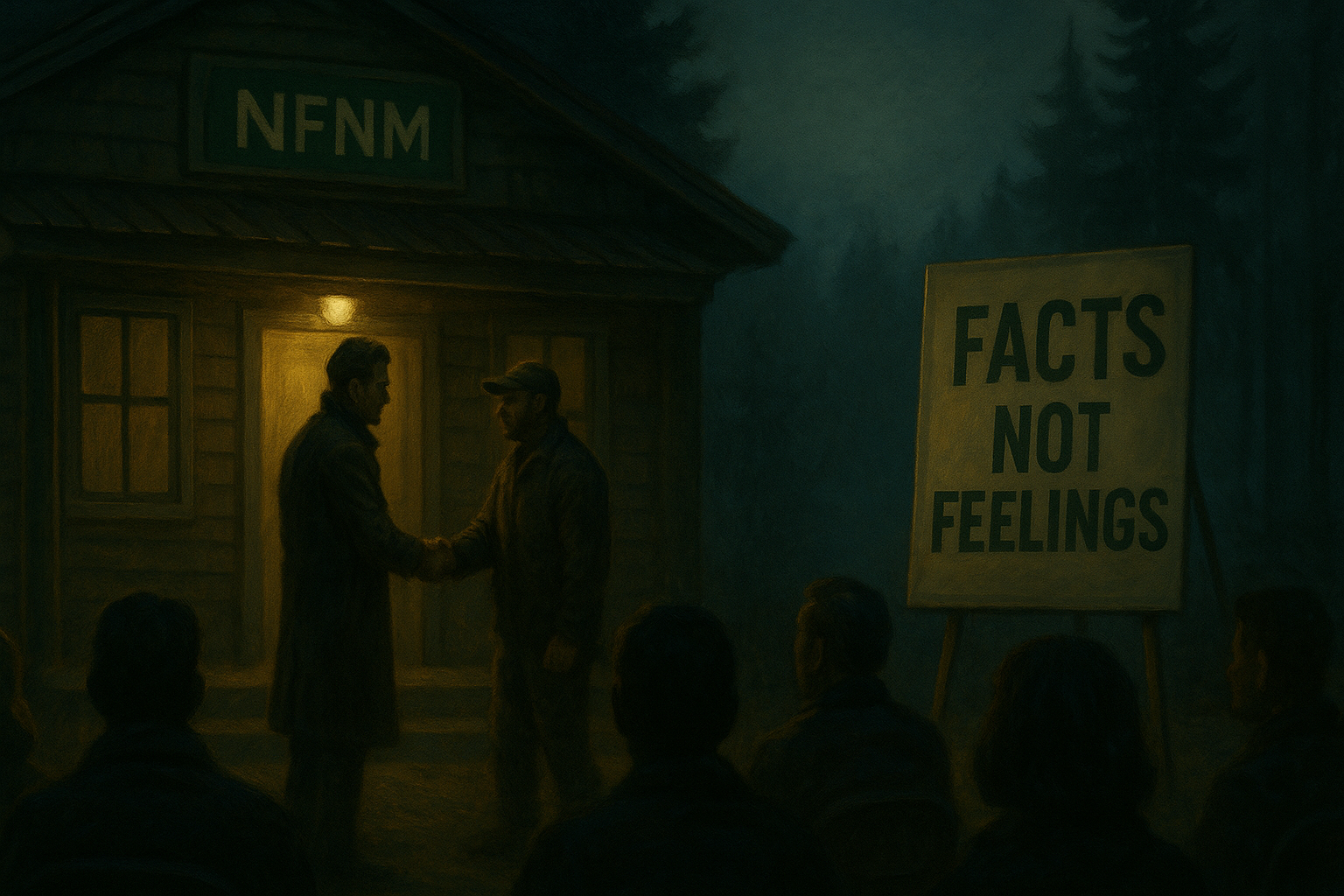
Rob and I haven’t always agreed. In fact, we’ve stood on opposite ends of some heated conversations. But today we’re standing on the same ground, not because we suddenly share opinions, but because we share respect. Rob will continue to speak for the cons. NFNM will present the pros. Between us lies what we both want for our community: a conversation grounded in honesty, civility, and courage.
Because at some point, we lost that. We lost the ability to disagree without dividing. Debate used to teach us about tolerance and acceptance, it once made us sharper, wiser, and stronger together. It’s time to bring that back.
The Bottom Line
Right now, this stage isn’t a “yes” or “no” vote on building anything. It’s simply asking if we’re open to the idea. If the Township says it’s open, then Alectra pays to do all the environmental, geological, and engineering studies on the site. Those studies don’t come cheap. We’re talking about work that could cost what our entire Township reserves hold. If we did them ourselves, we’d be writing cheques in the hundreds of thousands, maybe millions.
If the studies come back showing the land isn’t right — if it’s unsafe, unstable, or environmentally sensitive — then the project stops. No battery gets built. But here’s the smart part: we still get to keep the studies. They become public record. That means next time the Township wants to do anything with that land whether it’s housing, a garage, or a fire station — we already have the data in hand. And we didn’t pay a dime for it.
So even a “no” later could still leave us with a stack of professional reports that would have cost us a fortune. That’s a win in itself.
In the long run, if the BESS ever does get built and then decommissioned twenty years from now, we’ll still have those same studies and updated assessments — all paid for by the proponent — ready for whatever comes next on that land. That’s how you turn exploration into insurance for the future.
So this round isn’t about jumping into anything. It’s about being smart enough to let someone else foot the bill for information we’ll need anyway. Then, when we know what’s under our feet, we can make a decision that’s informed, not emotional.
That’s how grown-up towns handle big choices: one cautious step at a time, but always moving forward.
The truth beneath the argument
This debate, at its heart, is about the future we leave our kids.
One side says: Protect the environment for our children’s future.
The other says: Don’t gatekeep opportunity and revenue from our children’s future just to preserve our comfort and familiarity.
Both are right. Our forests, lakes, and night skies are sacred. But so are stable roads, functioning fire services, and reasons for young families to stay. Pretending we have to choose one over the other is how small towns lose twice.
Who are we to hold back our children’s economy just to freeze a postcard of the past? Rural character isn’t a museum exhibit. It’s a living place where bills come due and where every “no” we say today becomes a heavier “yes” someone else must carry tomorrow.
Saying no to everything doesn’t stop the math — it concentrates it on to fewer shoulders. Roads still heave, culverts still fail, and the levy still climbs. The world moves on either way. The question is whether North Frontenac will move with it, or just be dragged along after.
The reality: this is about money and benefit
Let’s be honest. No one hosts a project like this to be nice. We do it because the community benefit payments and leases could materially help the Township, possibly more than $140,000 a year, indexed to inflation, plus property taxes and new contracting work plus additional land lease payments to the township.
That’s not fantasy. Towns like Centre Wellington, Edwardsburgh Cardinal, and Ottawa have already put their BESS dollars to work in recreation, community foundations, and infrastructure. Other small towns now collect hundreds of thousands annually in community funds tied to long-term projects. They didn’t lose their soul. They gained breathing room.
That’s what this conversation should be about: terms, not teams.
What we can learn from each other
Rob’s petition speaks for the cautious heart of this community. The people who love this place so fiercely they fear change will ruin it. I respect that.
NFNM speaks for the practical side — the people who worry that without growth, the weight of this Township will fall entirely on those left behind. That’s a fair fear too.
It’s the classic Batman and Superman scenario. Two heroes, different methods, same purpose. Both believe they’re saving the city. And in their own way, they are. Debate doesn’t have to make one of them the villain.
So let’s stop turning neighbours into enemies. Let’s prove a small town can argue big issues without burning bridges. Let’s set an example for the next generation. An example that disagreement isn’t a threat; it’s a teacher.
A Final Word
Council says it values transparency, yet residents were handed PDFs and PowerPoints that felt more like marketing than communication. If the Township truly wants consent, it has to earn it through open dialogue. And if people decide to be open to the idea, the Township must meet us halfway and show—in plain black and white—where every dollar will go and how it will serve the community.
This isn’t about taking sides; it’s about taking part. If we engage, we can shape the outcome in writing—the terms, the protections, the dollars, and the proof. If we stay silent, the decision still gets made without our fingerprints or our share. And if we decide we aren’t even open to a conversation, we send a louder message: that North Frontenac is closed to new ideas and future opportunities before they’re even heard. That’s not prudence; that’s a closed door.
So read. Question. Talk. Disagree. But do it with respect. That’s how small towns stay whole. That’s how we teach tolerance again. And that’s how we make sure our children inherit not just the land, but the lessons that built it.