
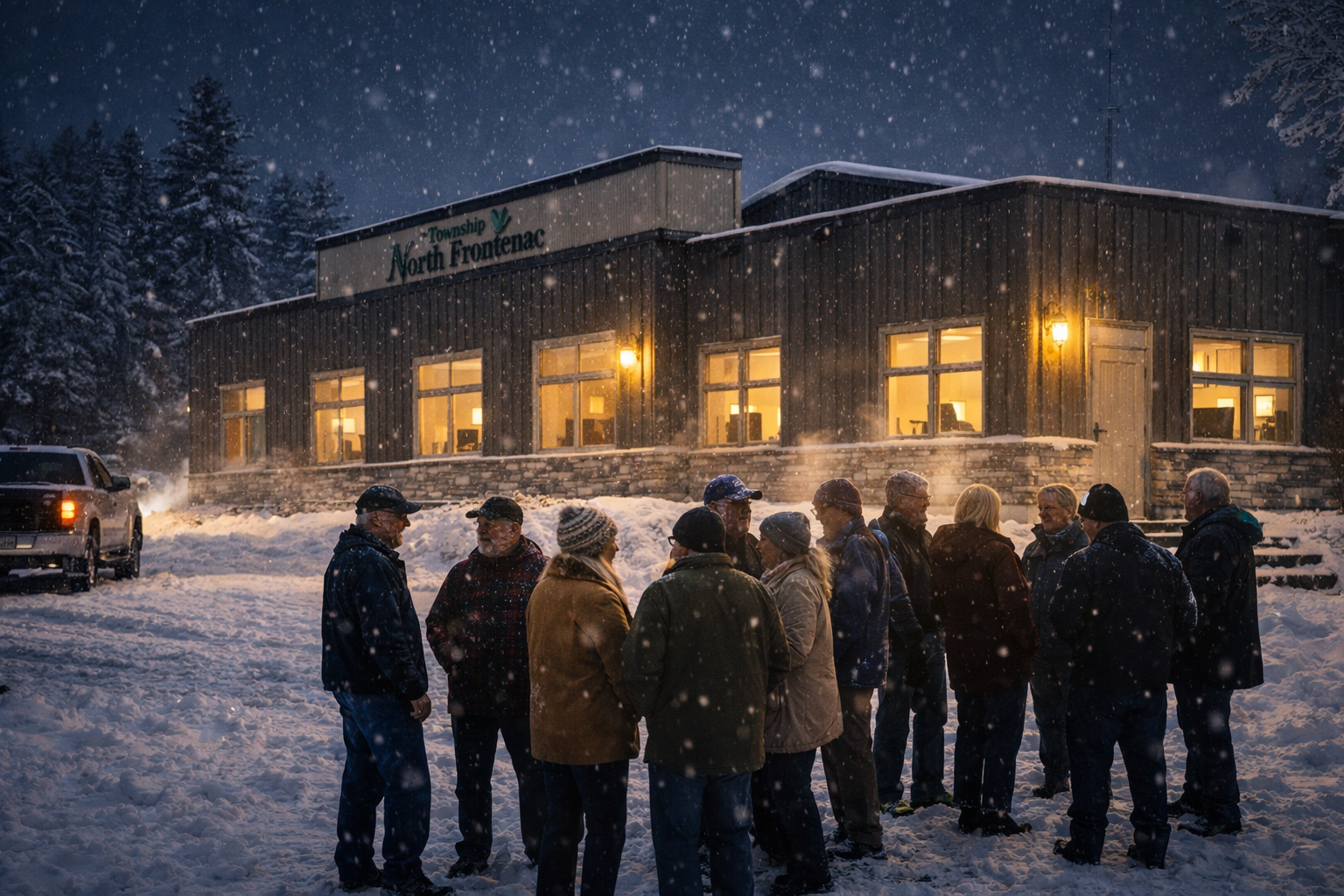
Febuary 6 public meeting and council meeting agenda watchdog points.
By Donald Morton | North Frontenac News Media | NFNM | Monday Febuary 2 2026The February 6 agenda lands in the part of municipal life most people never see. Council meetings feel public when the room is full and comments are sharp. They feel very different when a fight leaves the room and turns into a formal process with deadlines, filings, evidence, and lawyers.
This is one of those agendas.
Land tribunal appeals and what happens after a community “wins"The most important thread in this package is the land tribunal appeal risk around planning files where council said no in the face of technical approvals. That choice is exactly what residents ask council to do when the stakes feel existential. Lake associations mobilize. Year-round residents show up. The pushback is intense, close to the level seen during the BESS situation in 2025. Council reaches the right answer for the time. But then the applicant appeals to the tribunal. Now council has to defend its decision with evidence and argument. The tribunal decides. Sometimes the tribunal agrees with council. Sometimes it does not.
This is the administrative reality that emerges when council says no on policy grounds instead of on technical grounds.
Council did that. Now the consequences are arriving.
The risk is that the tribunal disagrees. If that happens, the project happens anyway, and North Frontenac has no leverage left. The applicants got what they wanted. The community got the fight. That is why council needs to be crystal clear that they are making a policy-based decision, not a technical one. If they cannot defend the “policy” with facts, the tribunal will side with the applicant.
The chance they missed: Council should have asked for an independent environmental assessment on the Crotch Lake concerns before the applicant did. That would have put the facts in council’s hands instead of the applicant’s hands. Now the facts will be generated through tribunal process, which is more expensive and less favorable to the municipality.
This week’s meeting will involve updates on these files, and it will show how clearly council is thinking about the strategic risk.
The Housing & Affordability Task Force is bringing delegations. This is where the real work happens. The task force was resident-led, staff-supported, council-directed. The outcomes are about to hit council’s desk, and council has to decide whether to implement. The delegation piece is a public step in that process.
The Economic Vitality Task Force is being formed. This is good. Economic development is not a separate thing. It is connected to housing, to infrastructure, to land use, to tax base diversity. The fact that council is running two task forces that overlap shows they understand that housing and economic development are linked problems.
The Tiny Homes on Wheels Bylaw is being finalized. This is the update to the framework for tiny homes on wheels. It is routine stuff that does not make headlines. It also changes how development works on the ground, which means it is actually important.
A note on Process: When council approves the bylaws and invites the delegations, the community should pay attention to who shows up. If the room is full, it shows the housing question has traction. If the room is empty, it shows people have become cynical about whether council will actually listen. That turnout is a data point for what happens next.