North Frontenac Council Has Closed the Public Out of Its Official Record
By Donald Morton, NFNM
On April 10, 2026, North Frontenac council passed a new procedural bylaw that quietly changes who gets a say in the official written record of a council meeting. The short version is this. The public no longer does.
The change lives in Bylaw 2026-23. Two pieces of that bylaw, read together, close the door.
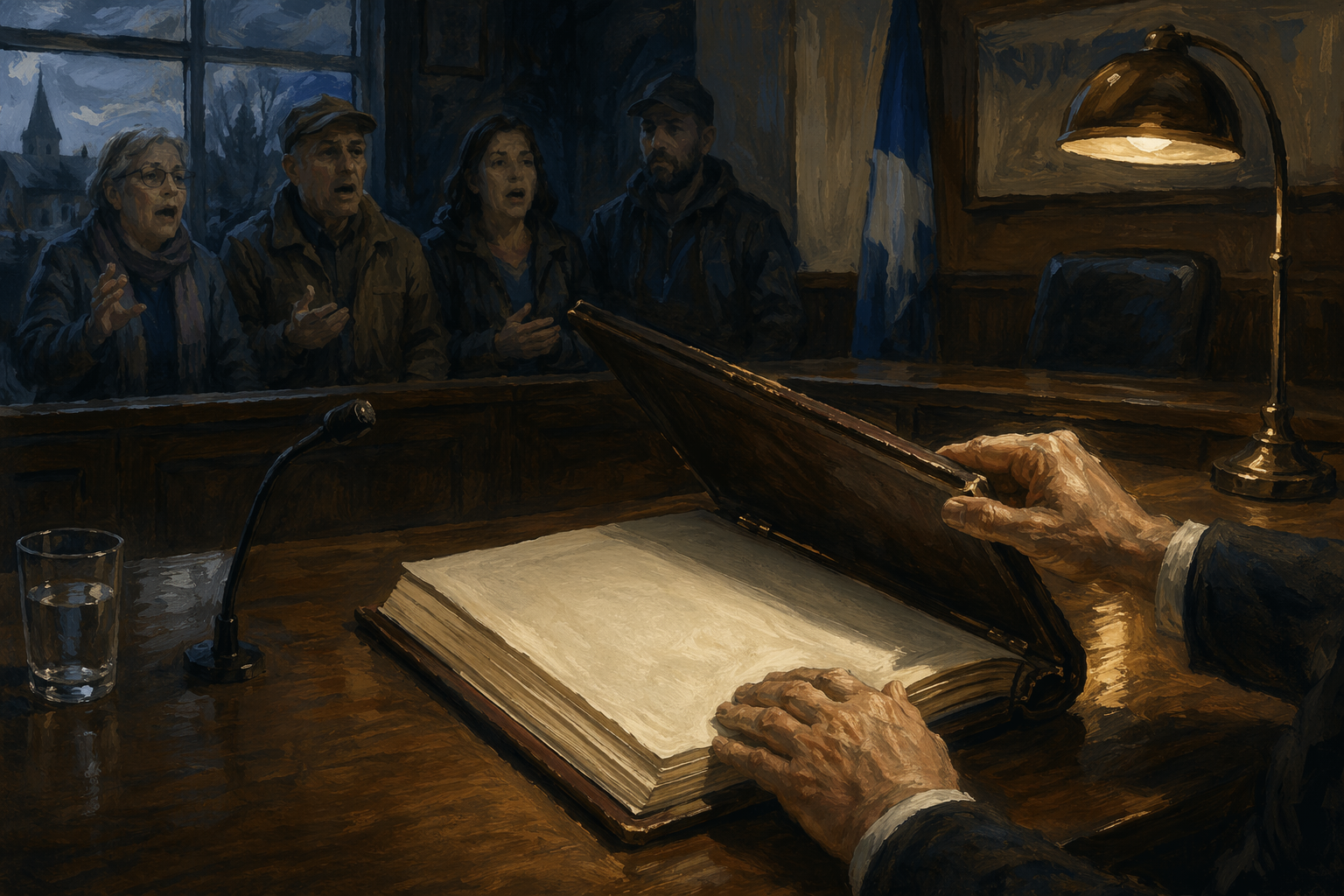
The first piece is Section 7.15, which governs Public Forum. The amended wording restricts Public Forum participation to “comments” only. Questions are no longer permitted. The section also states, in its own words, that “These Public comments will not form part of the Council Minutes.”
The second piece is Section 7.2, which sets the order of business for a regular meeting. Adoption of Minutes sits at item 9. Public Forum sits at item 18.
Put those two facts side by side and the effect is simple. By the time a resident gets their five minutes at Public Forum, council has already adopted the minutes from the previous meeting. And whatever that resident says during Public Forum is, by the bylaw’s own terms, kept out of the minutes of the current one.
There is no point in the meeting where a member of the public can speak and have what they said captured in the official record.
For a resident who drives to the municipal office because something matters to them, the practical result is the same whether they show up or stay home. Their words are heard in the room. Their words are not written down. The written record of North Frontenac council meetings now belongs entirely to council and staff.
On process, the Section 7.15 change moved through an administrative report from Clerk Tara Mieske on March 20, 2026. The amendment was shown in red strikethrough form in that report, with the word “questions” struck out and replaced by “comments.” Council then passed the full bylaw on April 10 in three readings the same day, a step permitted under the bylaw itself. In a reply to a public inquiry on April 14, 2026, Clerk Mieske confirmed that the current Procedural Policy went through the March 20 administrative report process.
None of this was hidden. It was also not announced as what it is, which is a structural change to how the public participates in municipal government.
The civic question this raises is not a legal one. Council has the authority to set its own procedures. The question is a democratic one. What does it mean for public engagement at the municipal level when residents have no procedural moment in a council meeting where they can influence what becomes the official written record of that meeting?
Readers can decide for themselves.
For context, Frontenac County, the upper-tier municipality that North Frontenac sits inside, recently confirmed NFNM on its media distribution list and welcomed coverage of county business. That is a small example of a local government moving in the other direction on public access.
Bylaw 2026-23 took effect on April 10, 2026.